 Medicine Shortages: An Information Architecture Problem
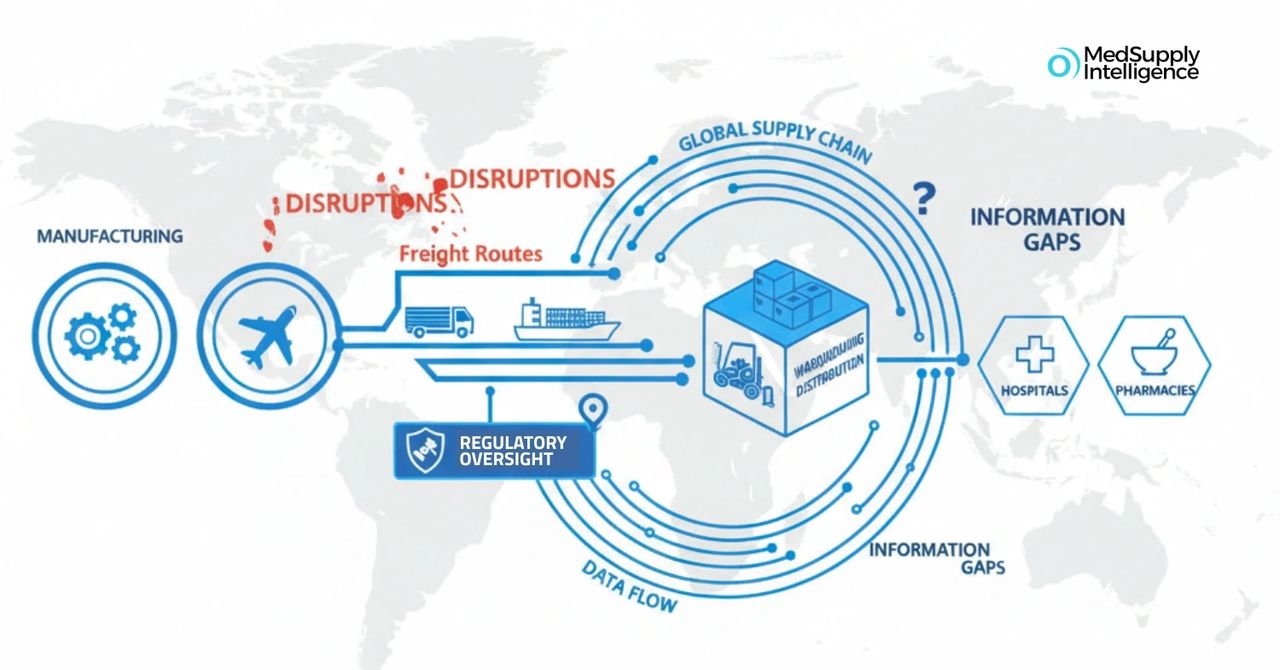
When medicines shortages are discussed publicly, the focus is usually on manufacturing disruption, API supply or global freight routes.
Inside NHS Trust pharmacy departments, the pressure looks different.
It is not episodic.
It is operational.
And it is continuous.
The Operational Load Inside Trusts
Across repeated conversations with Chief Pharmacists, a consistent pattern emerges:
-
Nearly half report spending more than 15 hours per week sourcing unavailable medicines
-
A further significant proportion spend 11–15 hours weekly
-
More than half of departments have added or redirected 0.5–1.5 WTE specifically to manage shortages
This is no longer a surge response.
Shortage management has become embedded in routine operations.
Senior pharmacists and procurement teams are dedicating substantial weekly capacity to:
-
Contacting suppliers
-
Checking multiple wholesaler platforms
-
Verifying stock positions
-
Securing alternatives
-
Updating local prescribing guidance
This time is not peripheral. It is structural.
It reduces bandwidth for optimisation, clinical governance and forward planning.
The Visibility Gap
The Visibility Gap
When pharmacy leaders are asked about the primary barrier to managing shortages, one issue consistently surfaces:
Timely, reliable information.
In practice, the first concrete signal of a supply issue is often a failed order.
By that point, teams are already reacting.
In the days or weeks prior, stock may have been tightening elsewhere.
Other Trusts may already be escalating the same product.
Community pharmacies may already be sourcing alternatives.
But that signal is fragmented.
Manufacturers communicate separately.
Wholesalers update independently.
National notices arrive after local disruption has begun.
Between early pressure and frontline visibility sits the gap.
That latency drives duplication.
A National Pattern of Duplication
The sourcing cycle inside one Trust is not unique.
It is being repeated, in parallel, across primary and secondary care:
-
Multiple Trusts contacting the same suppliers
-
Multiple procurement teams chasing the same constrained lines
-
Multiple Drug and Therapeutics Committees reviewing the same substitutions
-
Multiple pharmacies manually rebuilding the same supply picture
Each organisation is acting rationally.
Collectively, the system is duplicating effort at scale.
When dozens of Trusts independently verify the same shortage on the same day, the cumulative cost is significant — not only in time, but in diverted clinical capacity.
Shortages may appear isolated at a product level.
Operationally, the response has become a shared, daily workload across the NHS.
What Earlier Visibility Changes
Global supply volatility will continue. Margin pressure and international dependencies are unlikely to disappear.
But the time lost chasing fragmented signals is not inevitable.
Earlier, consolidated visibility changes:
-
When sourcing begins
-
Whether substitutions are proactive or reactive
-
How much staff time is absorbed in verification
-
How many organisations repeat the same manual checks
Reducing the latency between emerging pressure and frontline awareness does not eliminate shortages.
It reduces duplication.
It shifts effort from reactive chasing to informed planning.
The Structural Question
If pharmacy teams are consistently diverting more than 15 hours per week…
If additional roles are now embedded purely to manage shortages…
If lack of timely visibility is repeatedly cited as the primary barrier…
Then the issue extends beyond physical stock levels.
It is a question of how information flows through the system.
When multiple organisations are reconstructing the same supply picture independently, every day, the challenge is not only securing medicine.
It is why visibility remains fragmented.
Addressing that gap does not require stabilising global manufacturing.
It requires reducing information latency across the medicines supply chain.
And that is measurable.