Clinical Trial Supply Strategy: De-risking Comparator Sourcing
Understanding how real-time market intelligence is reshaping comparator sourcing strategy in clinical trials.
The Backbone of Trial Integrity
In clinical trials, supply is not just a logistics function. It underpins patient safety, protocol integrity, and study timelines.
For Clinical Trial Supply (CTS) professionals, the objective is clear: ensure the right comparator reaches the right patient at the right time.
Execution, however, is rarely straightforward.
Comparator medicines that appear stable at protocol design can become volatile months later. Generic markets shift without warning. Export bans emerge. Manufacturing pauses. Lead times extend.
When supply visibility is limited to historical data and manual checks, teams are forced to react to events that were already in motion.
To protect trials effectively, CTS must move from reactive sourcing to proactive supply assurance.
The CTS Challenge
CTS teams typically:
-
Lock comparator pricing at protocol stage
-
Forecast supply across multiple countries
-
Build storage strategies for oncology and high-risk generics
Yet mid-trial they may face:
-
32+ week lead times
-
Sudden generic shortages
-
5–10x pricing spikes
-
Export restrictions
-
Manufacturing or distribution disruption in another EU market
By the time these issues are visible in procurement channels, the market has already shifted.
CTS businesses are exposed in two primary ways:
-
Mid-trial resupply risk = price shock and availability collapse
-
Forward-buy risk = tying up capital in the wrong molecule at the wrong time
The Cost of the Mid-Trial Surprise
Every CTS manager recognises the scenario.
Initial supply is secured. The trial is underway. Resupply is triggered and the market has changed.
A generic manufacturer pauses production. A European country restricts exports. A product that was available yesterday now carries a 32-week lead time. Where stock exists, scarcity drives aggressive price escalation.
These are not isolated logistical inconveniences. They directly affect:
-
Study timelines
-
Budget forecasts
-
Margin stability
-
Sponsor confidence
The issue is rarely effort. It is visibility.
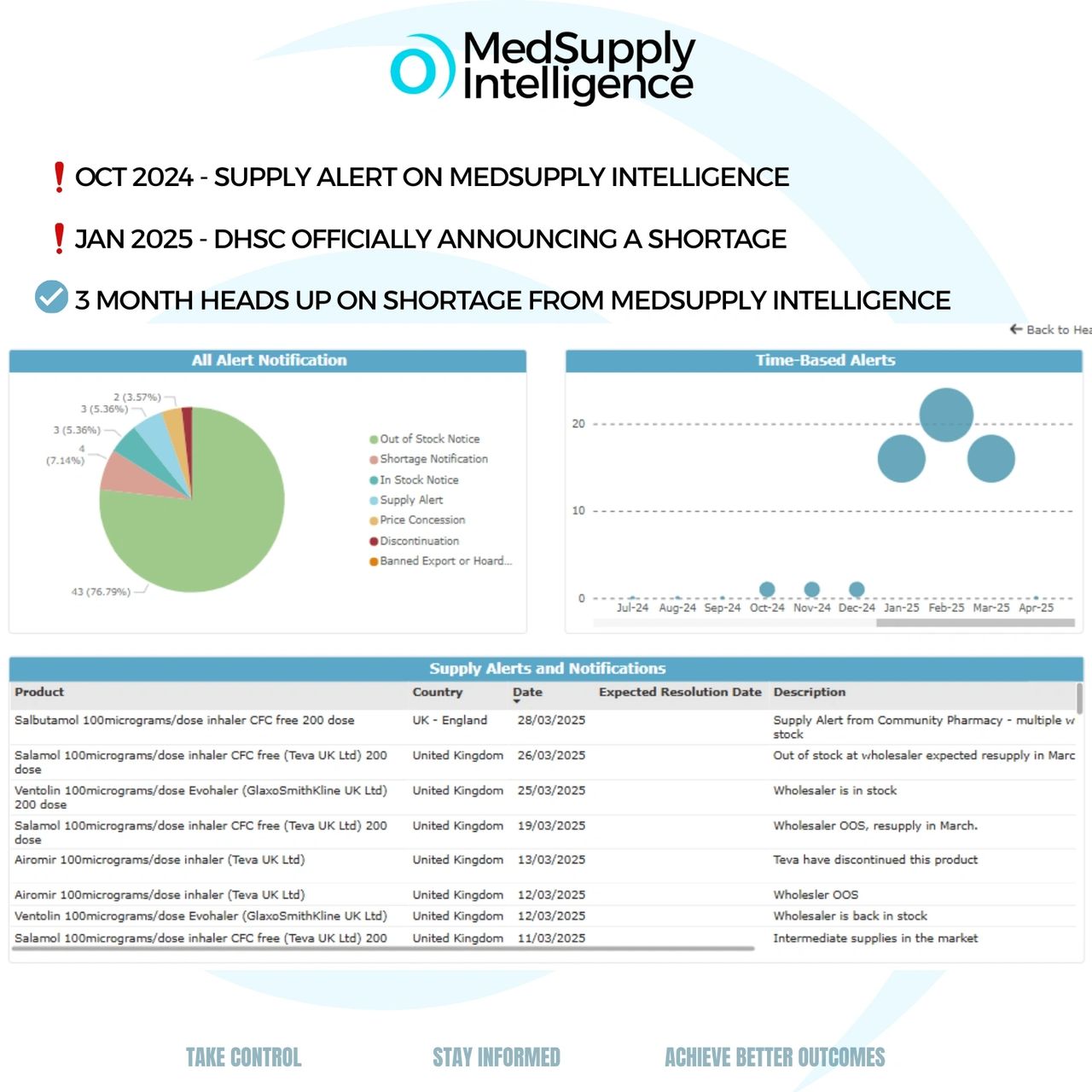
Early warning signals often appear weeks or months before shortages become obvious at local wholesale level. Without cross-border intelligence, these signals remain unseen.
The Forward-Buy Dilemma: From Speculation to Calculated Decision
 Clinical Trial Supply Strategy: De-risking Comparator Sourcing
Many Clinical Trial Supply (CTS) providers are evolving their strategies toward supply assurance models, which involve storing critical comparators like oncology generics to guarantee availability for sponsors. While this approach is robust, it introduces significant financial exposure. The timing of these purchases is critical; buying too early ties up working capital and increases the risk of expiry, whereas buying too late can lead to margin erosion from price escalation or a total collapse in availability.
Choosing the wrong molecule to store presents another risk, leaving a provider holding stable stock while other essential products become scarce. Data-led intelligence mitigates this speculation by enabling teams to make evidence-based decisions. By monitoring key indicators such as multi-country shortage velocity, recurring volatility patterns, and upstream manufacturing signals, CTS teams can identify when a molecule is entering a period of instability. This foresight transforms the decision to forward-buy from a reactive gamble into a strategic, evidence-backed action.
Tactical Intelligence: How CTS Teams Use Live Market Data
Comparator Risk Profiling Before Trial Launch
Before finalising supply agreements:
-
Review 6–24 month shortage history by molecule
-
Detect cross-border shortage patterns
-
Identify recurring volatility cycles
-
Track export bans, recalls, PI activity, discontinuations
-
Assess structural vs temporary shortages
Comparator selection shifts from assumption to measurable risk assessment.
Mid-Trial Early Warning Monitoring
For active trials:
-
Monitor real-time supply alerts across UK and global markets
-
Detect upstream disruption before pricing spikes
-
Identify clustering of alerts across countries
-
Track manufacturer rotation patterns
If signals intensify, CTS teams can:
-
Secure additional inventory early
-
Advise sponsors to accelerate purchasing
-
Negotiate from an informed position
-
Avoid emergency procurement premiums
Pricing Intelligence Beyond the Price List
Generic pricing rarely follows tariff logic during supply tightening.
Advanced intelligence allows CTS teams to:
-
Benchmark real-world transactional pricing
-
Detect abnormal deviation from baseline
-
Monitor upward pricing pressure before committing to contracts
-
Support sponsor conversations with data-backed evidence
Margin protection becomes proactive rather than defensive.
Cross-Border Molecule-Level Visibility
Clinical trials rarely operate within a single geography.
Shortage signals in Switzerland today can indicate supply disruption in the UK tomorrow. Distribution issues in Greece may precede export restrictions elsewhere.
Aggregated global data: government notifications, manufacturer updates, export signals - builds a complete molecule-level story.
This reduces blind spots created by single-country sourcing views.
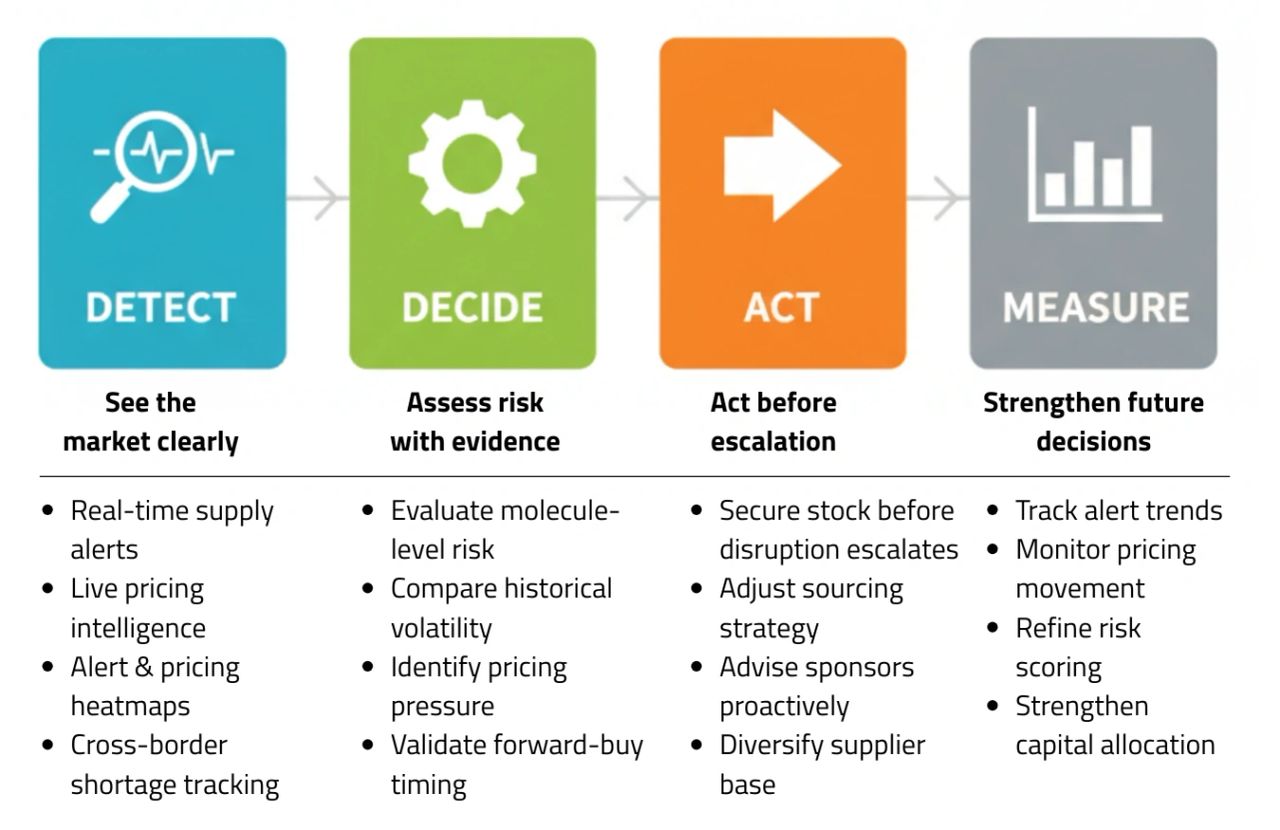
How It Works:
 Clinical Trial Supply Strategy: De-risking Comparator Sourcing
Commercial Impact for Clinical Trial Supply
Data-led supply assurance enables CTS providers to:
-
Reduce emergency procurement
-
Minimise premium freight events
-
Avoid mid-trial comparator replacement
-
Protect working capital tied up in oncology stock
-
Strengthen RFP positioning with risk-backed sourcing strategy
-
Increase sponsor trust through transparency
In volatile generic markets, informed timing can determine whether capital is protected or eroded.
A Sharpened Positioning
MedSupply Intelligence enables Clinical Trial Supply providers to anticipate comparator instability, protect margin, and design forward-buy strategies based on live, cross-border market signals rather than hindsight.
In an environment where trial continuity depends on supply certainty, data is not an advantage. It is infrastructure.