Supply Alerts vs Shortage Notifications: A Critical Distinction
Official shortage lists are lagging indicators. Learn why supply alerts are crucial for managing Parkinson’s medicine volatility and securing patient care.
In the pharmaceutical industry, semantics can sometimes get in the way of solutions. There is often a lengthy debate about the precise definition of a “shortage.” Is it a shortage when one wholesaler is out of stock, or only when the manufacturer declares zero inventory? Is it a shortage if a generic alternative exists, even if the patient cannot tolerate it?
While industry bodies and regulators debate these definitions, procurement teams are left facing a simple, brutal reality: they cannot get the stock they need.
If you are waiting for an official shortage notification to trigger your mitigation strategy, you are already too late. Official notices are lagging indicators—they confirm a crisis that has already taken hold. To protect your operations and your patients, you do not need notifications; you need supply alerts.
The Difference Between a Notification and an Alert
Understanding the distinction between these two concepts is critical for modern supply chain management.
A shortage notification is a formal declaration. It is the final flag raised when the supply chain has broken down completely. By the time this notice is published, stock is likely depleted across the market, prices may have already surged, and your competitors have already engaged alternative suppliers.
A supply alert, on the other hand, is a piece of real-time intelligence. It is a signal intercepted from the market before the official breakdown occurs. It might be a sudden spike in wholesaler pricing, a regional stock-out in a neighbouring country, or a pattern of failed deliveries from a specific manufacturer.
Alerts give you a head start. They provide the window of opportunity needed to secure stock, adjust formularies, or identify alternative sourcing routes before the rest of the market reacts.
Case Study: The escalating risk for Parkinson’s Medicines
To illustrate why this distinction matters, we only need to look at the current state of Parkinson’s disease medicine in the UK. For patients living with Parkinson’s medicine timing is not just important; it is critical. A missed or delayed dose can lead to severe “off” periods where symptoms return uncontrollably. Stability of supply is essential.
However, our data reveals a market that is anything but stable. While official lists may only show a handful of confirmed shortages, our system which tracks over 5,000 supply alerts every month, shows a much more volatile picture.
Over the last 12 months, we have tracked significant instability across three key product lines:
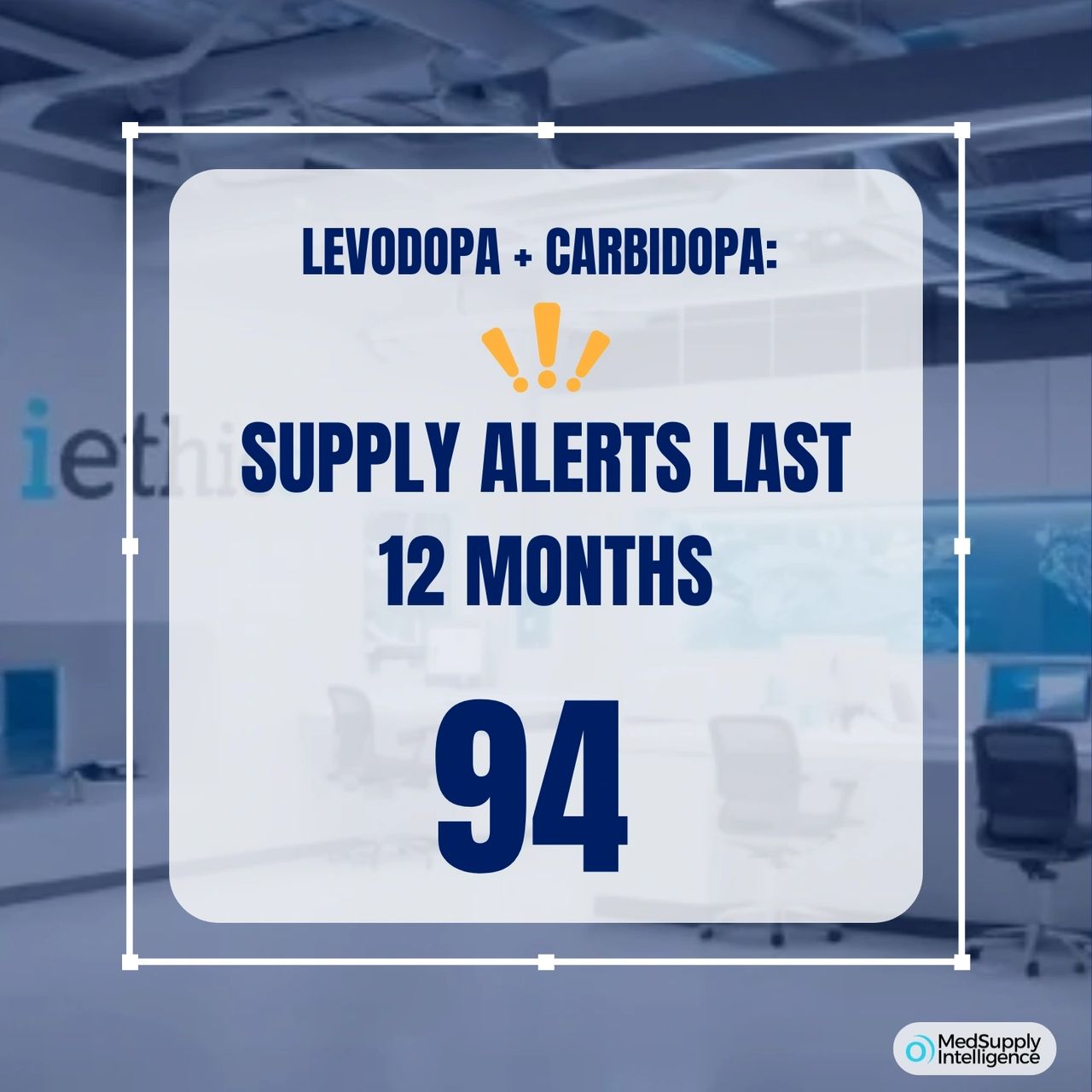
1. Levodopa + Carbidopa
94 Supply Alerts in the last 12 months.
This combination is a cornerstone of Parkinson’s treatment. Nearly 100 alerts in a year suggests chronic instability. For a pharmacy team, this means almost two alerts every week - constant noise and uncertainty that requires continuous monitoring.
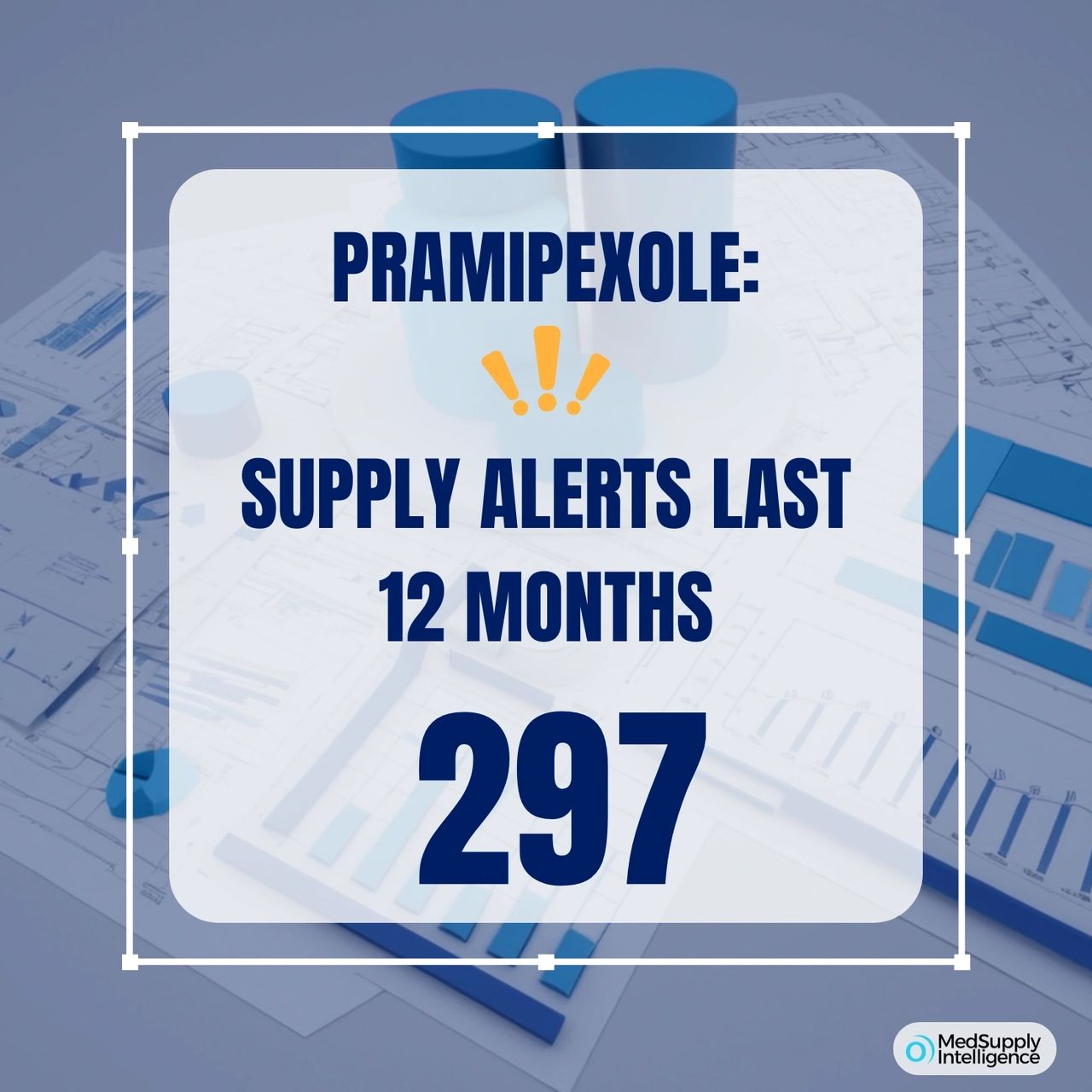
2. Pramipexole
297 Supply Alerts in the last 12 months.
The data here is staggering. With nearly 300 alerts, Pramipexole has experienced intense volatility. Relying on official “out of stock” notices for a product fluctuating this wildly would leave a pharmacy exposed to risk almost daily.
3. Ropinirole
213 Supply Alerts in the last 12 months.
Another critical dopamine agonist showing over 200 warning signs in a single year.
Each of these alerts represents a potential fracture in the supply chain. It might be a temporary unavailability at a major wholesaler or a price concession indicating scarcity. If you are only watching the official shortage list, you are missing the hundreds of warning signs that precede the crisis.
Looking Ahead: Projections into 2026
The value of supply alerts lies not just in managing today’s orders, but in forecasting tomorrow’s challenges. Real-time intelligence allows us to look forward and predict where the long-term pressure points will be.
Current data indicates that supply issues for key branded lines, such as Mirapexin and Repinex XL, are now projected to extend well into March and April 2026.
This is a significant horizon. Knowing this now allows healthcare providers and wholesalers to plan strategically. It moves the conversation from “Can we get stock for tomorrow?” to “How do we ensure continuity of care for the next 18 months?”
Without this forward-looking intelligence, a procurement manager might scramble for stock month after month, unaware that the issue is systemic and long-term. With the data in hand, they can make informed decisions about switching patients to stable alternatives or setting up robust long-term supply agreements.
5,000+ Signals a Month: Turning Noise into Strategy
The sheer volume of data in the pharmaceutical market can be overwhelming. Our system processes over 5,000 supply alerts every month. To the untrained eye, this might look like noise. But to a strategic procurement team, it is a map.
This data allows you to:
-
Act Decisively: When you see alerts spiking for a specific molecule (like Pramipexole), you know to increase stock holding immediately, rather than waiting for a zero-stock situation.
-
Prioritise Resources: You can focus your team’s time on the products showing the highest “alert density,” ensuring you are solving the biggest problems first.
-
Inform Clinical Decisions: If a specific brand is showing long-term instability (like the 2026 projections mentioned above), clinicians can be advised early to consider therapeutic switches, ensuring patient care is managed proactively rather than in a panic.
Conclusion: Stop Waiting for the “Shortage”
The debate over what constitutes a shortage will likely continue in regulatory circles. But for those on the front lines of medicine supply - manufacturers, wholesalers, and pharmacists, the definition is irrelevant. If you cannot get the product, it is a shortage.
To navigate this environment, you must move beyond lagging indicators. You cannot drive a car by only looking in the rear-view mirror, and you cannot manage a modern supply chain by only reading official shortage lists.
You need early warnings. You need market signals. You need supply alerts.
Don’t let your team be the last to know. Click the link below to book a demonstration and see how MedSupply Intelligence tracks the products critical to your business.