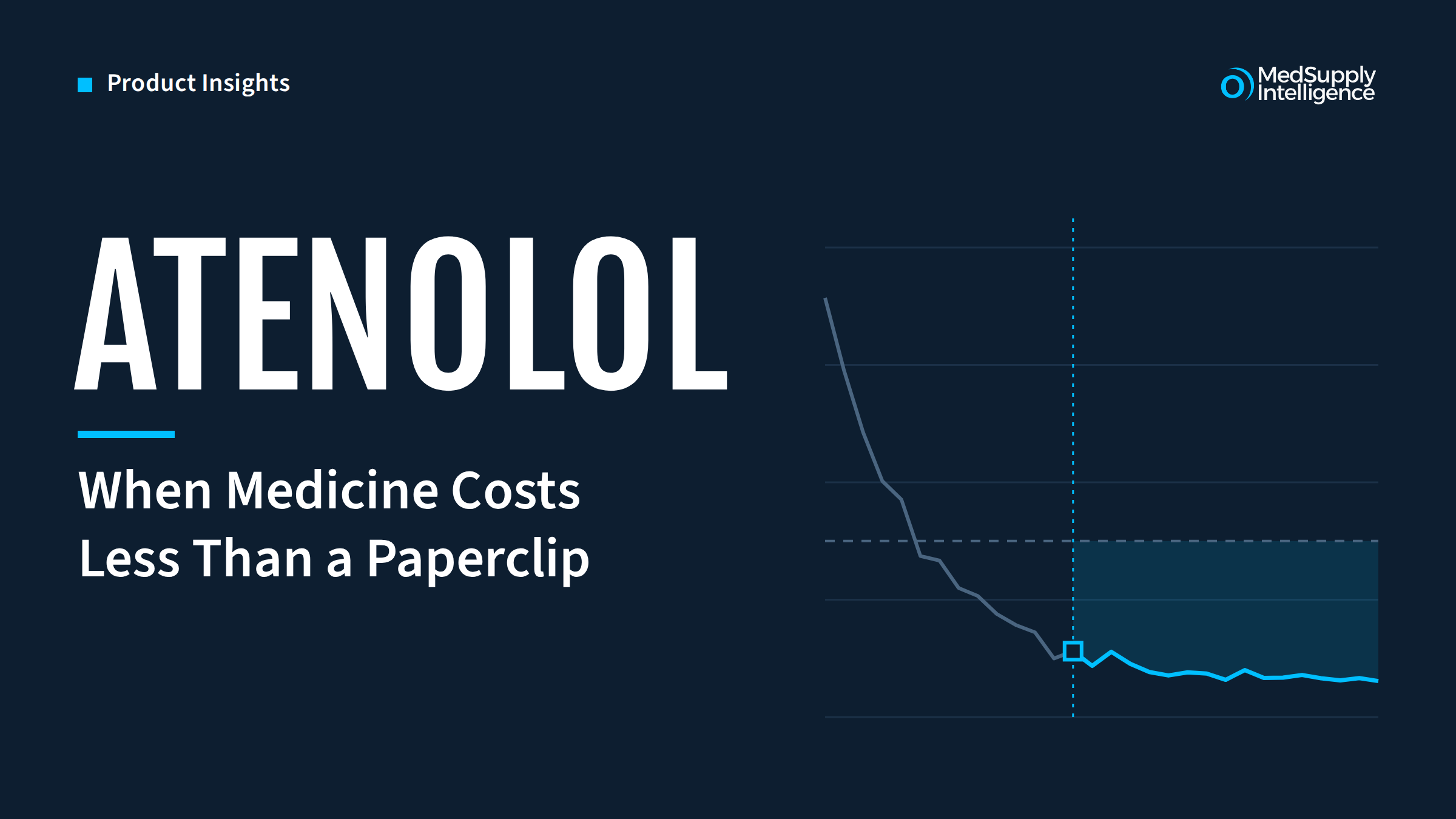
Imagine walking into a pharmacy and learning that a heart medicine, something taken daily by hundreds of thousands of people, costs the pharmacy just 3 pence per pack. Not £3. Not 30p. Three pennies for a box of 28 atenolol 50mg tablets.
That is less than the cost of a paperclip. It is less than the cost of the blister packaging that holds the tablets. It is certainly less than the electricity used to run the machines that manufacture them.
Yet, that is exactly what one UK pharmacy paid recently. As unbelievable as it sounds, it isn’t a fake product, it isn’t grey-market stock, and it isn’t illegal. It is a symptom of something peculiar and dangerous in the UK’s drug-pricing system: a generic-pricing model so aggressive that it can push life-sustaining medicines below the level they realistically cost to produce.
This isn’t a triumph of efficiency. It is a race to the bottom, and the finish line is a supply chain collapse.
The Dangerous Illusion of a Bargain
Atenolol is an old, off-patent beta-blocker used for high blood pressure, angina, and irregular heart rhythms. The molecule is simple, the production process is mature, and the demand is steady. It shouldn’t be expensive. But it also shouldn’t be free.
Manufacturing the active ingredient, forming the tablets, coating them, packaging them, testing for quality contaminants, and shipping them internationally carries an inescapable base cost.
Global studies on generic manufacturing give us a rough sense of these costs. For medicines like atenolol, the raw production typically works out to around 1–3 U.S. cents per tablet. In UK terms, that is roughly 0.8–2.5 pence per tablet.
Multiply that by 28 tablets, and you would expect a rough manufacturing, packing, and distribution cost of 22p to 70p per pack, conservatively.
Even if a manufacturer somewhere optimised everything to the extreme and stripped out serious profit, you would still expect the price to be in the tens of pence, not a handful of coppers.
How Is a 3p Price Even Possible?
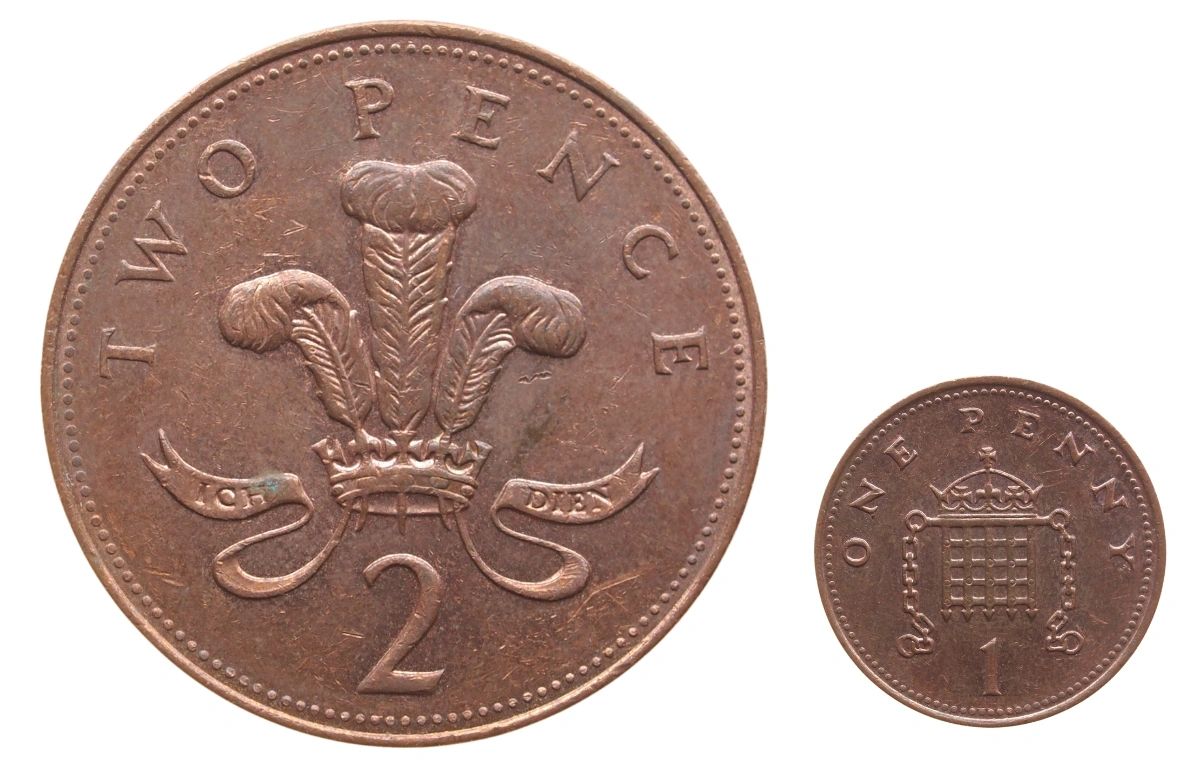
That 3p price doesn’t mean someone discovered a magical factory where medicines can be produced for fractions of a penny. It means something else is happening, and it’s a toxic cocktail of market failures.
1. Hyper-Competition
When dozens of companies make the same generic drug, prices collapse. Some suppliers under-quote simply to keep market share, bleeding money in the process just to stay relevant.
2. Overstock Dumping
If a wholesaler has too much stock approaching its expiry date, they may offload it at any price rather than write it off completely. It’s a fire sale on heart medicine.
3. Opaque Rebate Schemes
Some suppliers sell medicines cheaply but recoup profits through bundled contracts or complex rebate schemes on other products. The “price” you see isn’t the real economic value.
4. Misaligned Reimbursement
The NHS Drug Tariff may reimburse pharmacies at a higher price than they actually pay, but this is not a functioning market. It is a high-stakes game of chicken, and the UK’s medicine supply is riding shotgun.
The True Cost of an Impossible Price
On one level, 3p for atenolol sounds like a triumph. Millions of pounds saved for the NHS. Patients protected from high prices. Generic competition working as intended.
But this view is dangerously short-sighted. Extreme price suppression has a dark flipside that doesn’t save money; it merely defers the cost, often with interest.
When manufacturers cannot make a profit, they exit the market. One by one, suppliers drop out until only a few remain. This consolidation decimates competition, creating fragility where resilience is needed.
The inevitable result? The market snaps back with a vengeance.
-
Supplies become fragile: With fewer manufacturers, a single factory issue can cause a national shortage.
-
Market consolidation: Weaker manufacturers exit, reducing competition.
-
Price spikes: When fewer suppliers remain, future prices may skyrocket.
In other words, pushing prices too low today risks shortages and higher costs tomorrow. The price of 3p today is a direct down payment on a major supply crisis tomorrow. It is not a bargain; it is a warning siren.
Stop Gambling with Patient Safety
The UK has one of the most aggressive generic-pricing systems in the world. While affordability is crucial, our obsession with driving down prices has created a system that values cost-cutting more than supply security.
When essential drugs are priced lower than sweets, lower than packaging, and lower than the energy used to produce them, it tells us something alarming: the system is eating itself alive.
A manufacturer might swallow a loss to stay in the market. A patient swallows a tablet to protect their heart. But if the system keeps swallowing the true cost of medicine production, eventually the supply will choke.
The Unsustainable Economics of Off-Patent Medicines
Beyond systemic weaknesses, a recent independent study sponsored by Viatris has shed light on the stark economic realities threatening the supply of generic, off-patent medicines. The analysis, conducted across 16 European countries, reveals an unsustainable financial environment for manufacturers.
Between 2020 and 2024, production costs spiralled. Industrial prices rose by nearly 32%, and labour costs increased by over 25%, not to mention soaring energy and raw material costs. During this same period, the prices of the medicines themselves often fell due to pricing pressures from national health systems.
For example, the average price of the top 10 off-patent antibiotics dropped by 10%, despite massive increases in production costs. Amoxicillin, one of the drugs most affected by widespread shortages in mid-2025, saw its price fall by almost 19%. This growing chasm between rising costs and falling revenues has driven many suppliers out of the market. The result is clear: in the countries analysed, there were over 240 product recalls and 385 shortage incidents for antibiotics alone.
This trend is evident across the continent. In Italy, for instance, the average price of the top 10 off-patent antibiotics fell by over 21% between 2020 and 2024, while production and labour costs rose by 26% and 9% respectively. Amoxicillin’s price in Italy plummeted by more than 38%. This market consolidation reduces the number of suppliers, which in turn increases the risk of major disruptions and compromises continuity of care for patients.
Conclusion: A Wake-Up Call
We need to stop treating essential medicines like disposable commodities and recognise that a secure supply chain has a cost. If a medicine is being sold below the realistic cost to make it, the system isn’t efficient; it’s broken. It is time to realise that resilience is a price we must be willing to pay.