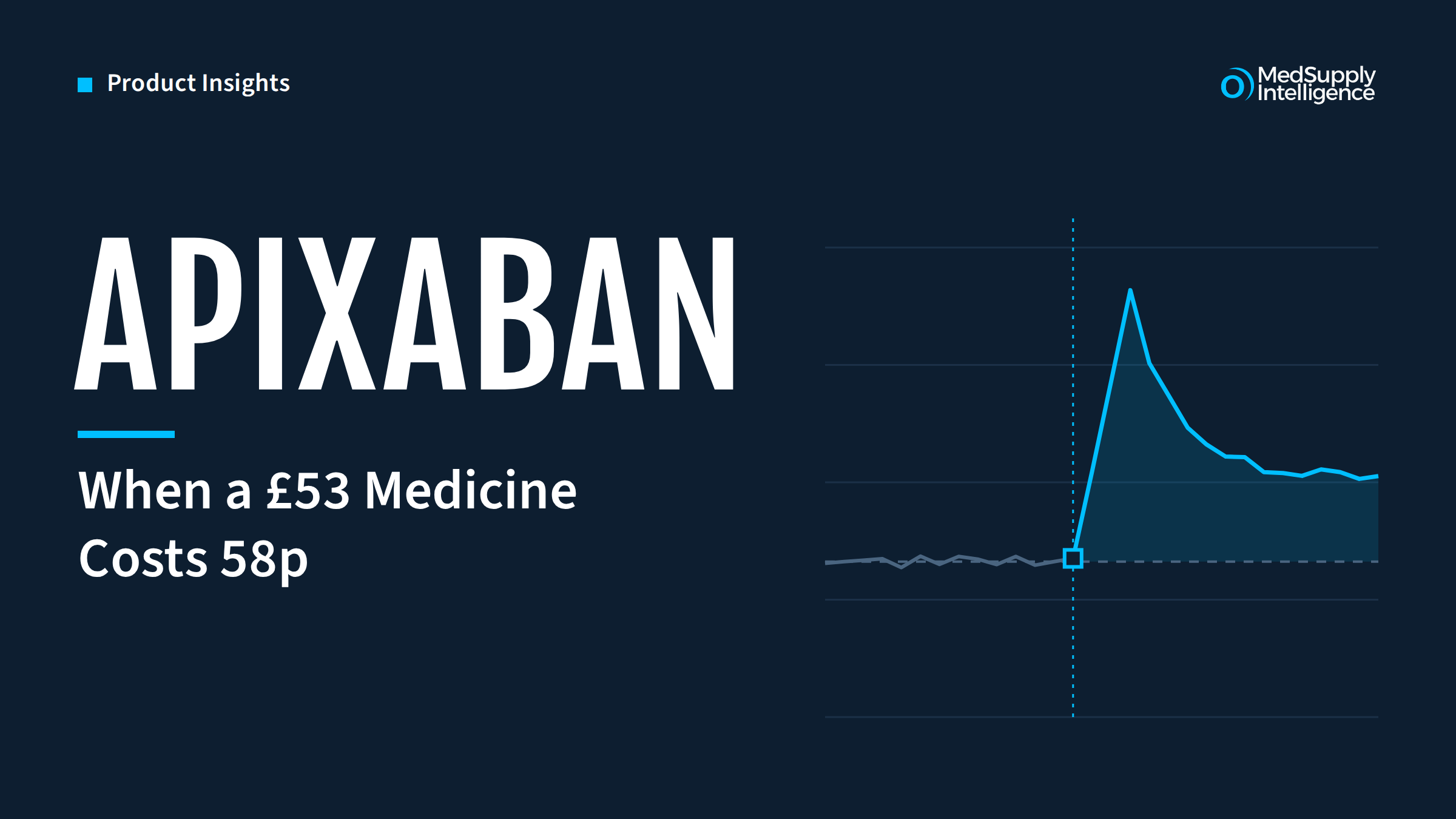
What does it say about our medicine system when a drug crucial to patient care plummets from premium-priced to pennies almost overnight? Apixaban’s price crash isn’t just headline grabbing, it signals a breakdown in the very logic underpinning our pharmaceutical market.
Just a few short months ago, Apixaban was the gold standard, clinical necessity matched by a price tag to match. Now, the same essential medicine goes for pennies, as if overnight its value to patients and the system simply evaporated. The price makes a mockery of market logic, daring anyone to call this progress.
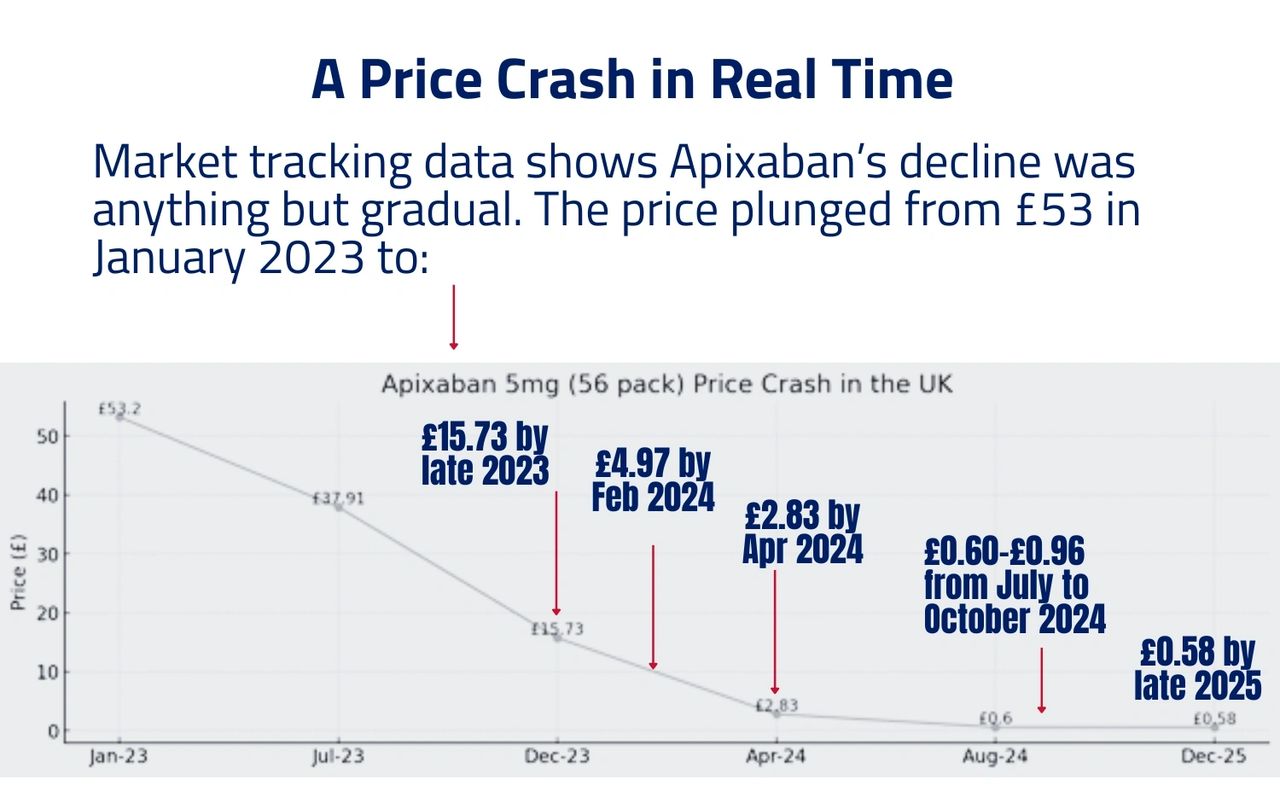
Just months ago, Apixaban stood as a high-cost, high-value medicine, a symbol of clinical progress that came at a price. Now, it’s on the shelf for less than a pound, not because innovation made it cheaper but because the market logic snapped. This isn’t a simple windfall for budgets or patients; it’s a stark alarm bell for everyone who depends on a steady, predictable supply of critical medicines. When a top-tier treatment can lose over 99% of its sticker price in a flash, what’s really left to hold up the rest of the system?
In the real world, a Marks and Spencer hamper costs £55. A Greggs mince pie costs 55p. In the bizarre world of UK medicine pricing, you can now buy the hamper for the price of the mince pie. Think about that. Not long ago, a pack of the vital anticoagulant Apixaban cost over £53. Today, the same pack sells for a staggering 58 pence. Instead of celebrating efficiency, what we’re really toasting is a system so upside-down it would make even Santa do a double take.
The Anatomy of a Price Crash
 Apixaban Pricing: When a £53 Medicine Costs 58p
Apixaban’s price collapse wasn’t gradual nor logical, it was a sharp, jarring reset that pulled the rug out from under pharmacies, prescribers, and patients alike. A medicine once benchmarked as premium, essential, and (supposedly) protected by layers of regulation, was stripped of its price overnight. This was less a fall, more an erasure and proof that when confidence in medicine pricing can be lost in an instant, so too can any sense of fairness or stability.
You can’t chalk this up to just “more generics equals better access.” Apixaban’s price plummet reveals what happens when economic gravity is ignored and suddenly, the floor gives way. Instead of a textbook example of cost-cutting for the greater good, the NHS and frontline staff are left with a fragile balancing act: try to reconcile wildly unpredictable pricing with the unchanging clinical reality that patients need their medicines, and pharmacies need to plan ahead. This isn’t market efficiency; it’s a warning that crucial systems can unravel almost overnight, leaving chaos for those delivering care and uncertainty for the patients relying on them.
Supply Problems Rose as Prices Fell
 Apixaban Pricing: When a £53 Medicine Costs 58p
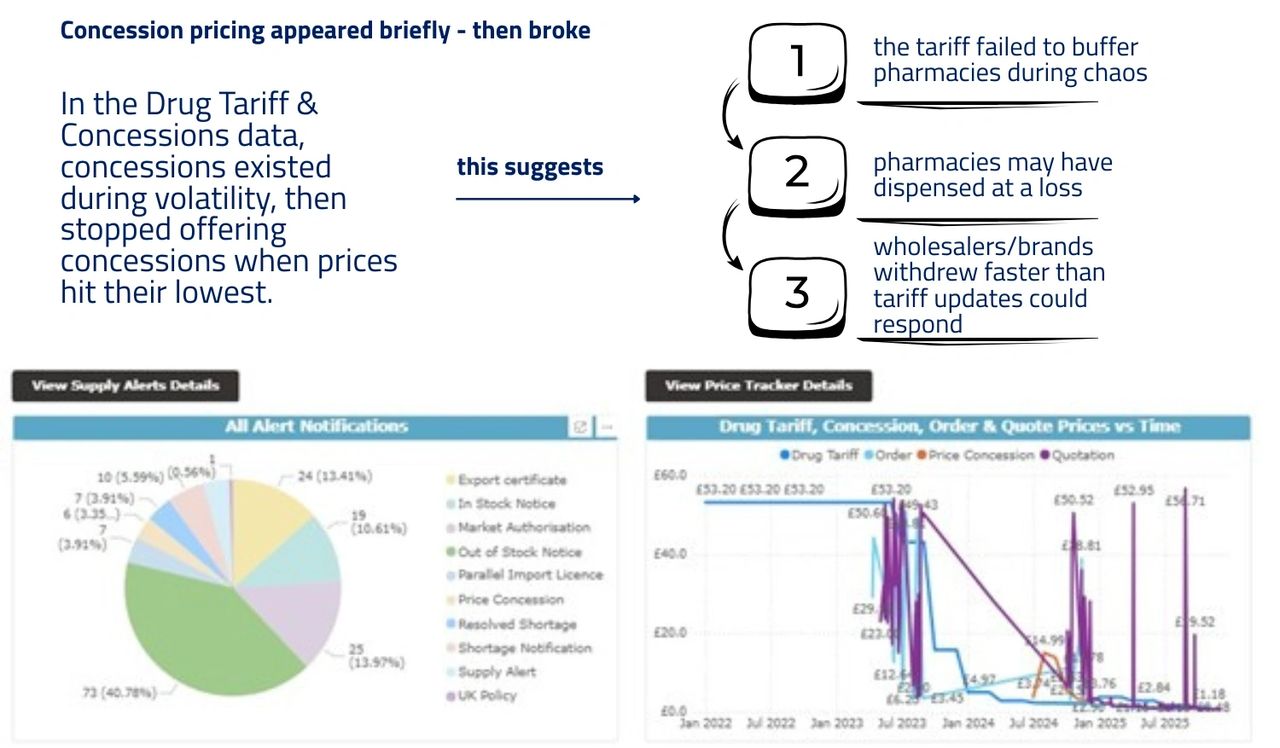
What followed this sharp price collapse wasn’t relief or celebration, it was a spike in uncertainty. As the bottom dropped out of Apixaban’s price, the foundations of its supply chain crumbled too. Pharmacies and procurement teams, once able to trust steady deliveries, suddenly faced a landscape littered with urgent alerts and unexpected gaps. The NHS traded predictability for price, discovering just how quickly the promise of abundance can unravel into availability chaos.
Steady prices once anchored reliability for both patients and pharmacies. But when Apixaban’s cost plunged into the realm of the absurd, predictability vanished and red-alerts surged. Instead of unlocking convenience, ultra-low pricing delivered confusion and volatility, supply lines frayed, and pharmacy shelves became increasingly unpredictable. It’s a cautionary tale: when prices are treated as disposable, so too is the security of access for everyone depending on that medicine.
Economic Chaos, Not Manufacturing Failure
The real culprit behind this chaos wasn’t a sudden shutdown of production lines, it was the collapse of financial logic in plain sight. As margins disintegrated and pricing tumbled far below sustainability, the entire system teetered. Premium medicines became financial afterthoughts overnight, not because of any disruption in how they’re made, but because the numbers no longer added up to support a steady flow. When price signals break, reliability quickly follows.
-
41% of alerts were for price concessions.
-
Only 11% were for actual “out of stock” notices.
The system was buckling under financial pressure. Regulation simply could not keep up with the market’s behaviour.
The UK as a “Price Sinkhole”
The plunge in UK prices didn’t just shake up the domestic market, it severed a key lifeline. With Apixaban trading at prices no other country would entertain, the steady flow of parallel imports stopped dead. Instead of benefiting from Europe’s broader safety net, the UK found itself effectively walled off, an outlier where stock simply had no incentive to cross the border.
The result?
When shelves go bare, we face the consequences alone.
When the UK’s price dips so low it defies sense, what comes next isn’t a flood of affordable stock, it’s a market exodus. International suppliers simply turn away, choosing stability and margin elsewhere.
The UK becomes less a trading hub and more a cautionary tale, cut off from continental buffers that once helped shore up supply.
We may boast about ultra-cheap prices, but in reality, it’s a fast track to isolation, left holding the risk when the rest of Europe moves on.
**The EU gets it right **
While the UK chases short-term savings through a high-risk free market, Europe plays a longer game. EU countries use regulated tenders and price ceilings as guardrails. They balance cost savings with the need for a stable supply of generics. Their systems are built to avoid the extreme volatility we see in the UK, ensuring suppliers stay in the market and patients have consistent access to medicine.
We Want to Hear From You
The Apixaban crash is a case study in what happens when price becomes the only metric that matters. But we want to know what this looks like from the front line.
If you are a pharmacist:
How is this volatility impacting your daily operations and your ability to plan?
If you are a wholesaler or manufacturer:
Where do you think Apixaban pricing is heading next year, rebound or further decline?
***Share your thoughts with us - support@iethico.com ***