Supply disruptions in the UK generics market are nothing new. What has changed is the ability to see them early, understand whether they are transient or structural, and translate that understanding into better decisions.
A recent case study with Co-Careldopa illustrates why access to structured, international supply and pricing intelligence is critical rather than simply “nice to have”.
UK signals are rarely the starting point
In this case, UK supply alerts and out-of-stock notifications began to emerge in late August / early September 2025. For many organisations, this is the point at which conversations start internally and with customers, often based on anecdotal feedback from wholesalers, pharmacies, or the field.
When viewed in a broader context, international data showed that shortages had already been developing in other markets, with some manufacturers referencing manufacturing issues months earlier.
That global visibility changes the interpretation of the UK signal: what might otherwise look like a short-term fluctuation begins to resemble a longer-running, structural issue.
This distinction matters, because it directly affects how organisations think about pricing, allocation, and duration.
Duration is as important as disruption
One of the most common commercial questions during a shortage is not whether prices can move, but how long the window will last.
Without broader market context, teams are often forced to answer this question with limited confidence. By contrast, seeing consistent disruption across multiple geographies over an extended period supports a more informed view on likely duration, even if certainty is never absolute.
This shifts internal conversations from reactive to probabilistic: not “will this resolve next month?”, but “what is the most likely time horizon, based on evidence elsewhere?”
Pricing data completes the picture
Overlaying supply intelligence with pricing data turns insight into action.
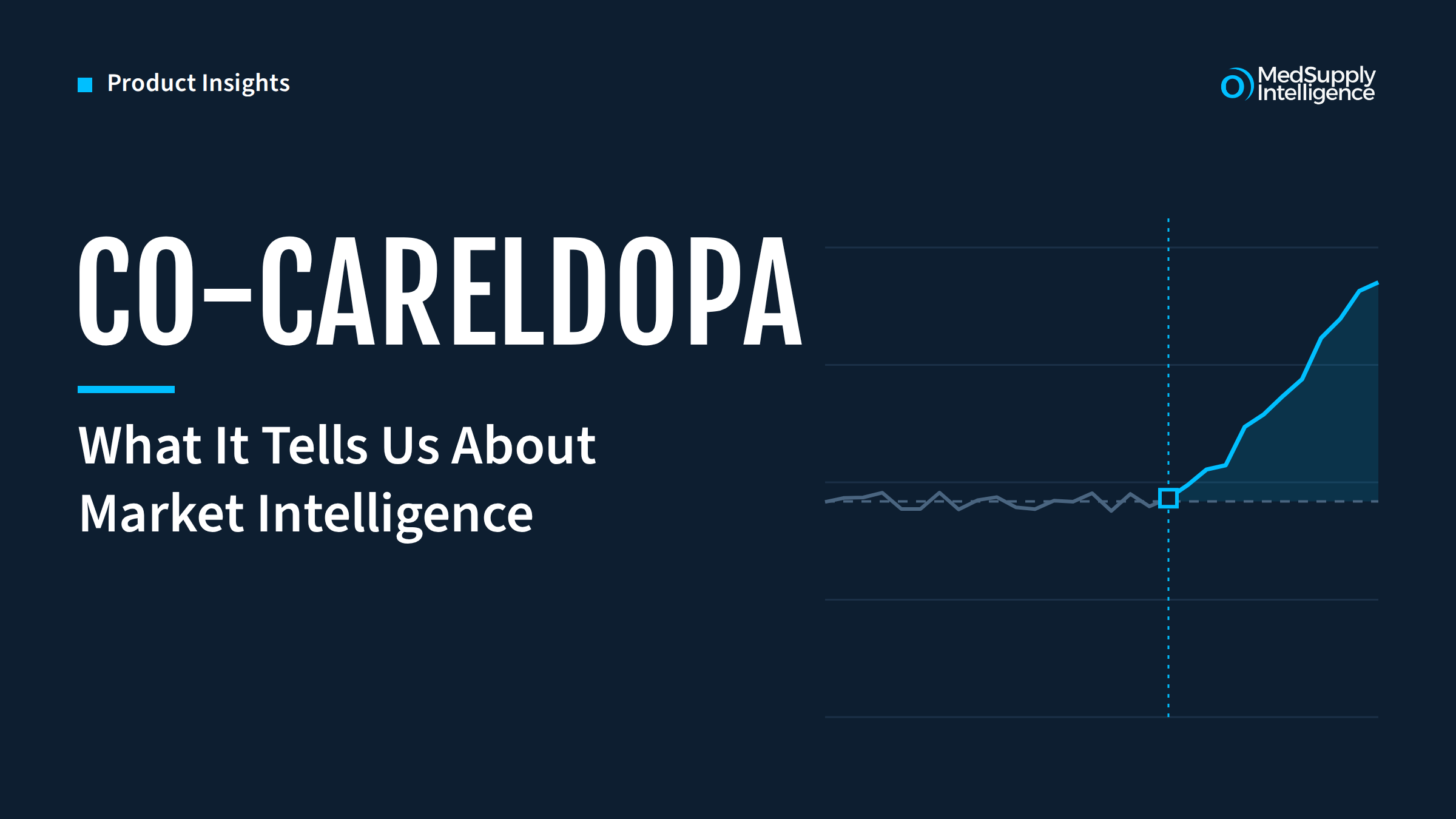
In this example, six months of pricing data showed a clear reset for generic products from October 2025 onwards. Against a baseline price of approximately £3.69 per pack, observed prices between October and December 2025 ranged from roughly £6.26 to £8.30.
From anecdotes to evidence
Perhaps the most underappreciated value of structured intelligence is its ability to validate (or challenge) market “noise”.
During periods of disruption, companies are often told conflicting stories: that stock is unavailable, that competitors are sitting on inventory, or that shortages are being exaggerated to influence price. Without independent data, it is difficult to know which signals to trust.
A consolidated view, combining real-time alerts, structured public information, international reporting, and direct research provides a more objective basis for decision-making. It does not replace judgement, but it materially improves it.
Why this matters now
As supply chains remain fragile and pricing pressure continues across primary and secondary care, the commercial advantage increasingly lies with organisations that can:
-
Detect emerging issues earlier
-
Understand whether they are local or global
-
Form a defensible view on duration
-
Align pricing and customer strategy accordingly
In that context, market intelligence is no longer just about awareness, it is about commercial readiness.