Citalopram Supply Shock 2025: Analysis & Future Lessons
**Remember late 2025? While everyone else was getting ready for the holidays, the UK’s medicine supply chain decided to have a small, yet spectacular, meltdown. **
We often assume that high-volume, well-established generic medicines will always be available. Citalopram, a staple treatment for depression and anxiety, has long been one of these reliable foundations in the UK’s pharmacopoeia. Yet, in late 2025, that foundation cracked.
The market experienced a sudden, acute shock that left pharmacists scrambling for stock and patients facing uncertainty. It wasn’t a gradual decline, but a rapid system stress test that exposed significant vulnerabilities in how we source essential medicines. By analysing the data behind this disruption, we can move beyond crisis management and start building a more resilient supply chain.
What Happened? A Snapshot of the Disruption
November and December 2025 presented a perfect storm for Citalopram supply. While patients continued to need their medication at normal rates, the machinery behind the scenes ground to a halt.
Our intelligence data reveals that this was not a UK-specific issue, nor was it confined to a single supplier. Instead, we witnessed global upstream manufacturing constraints that interacted poorly with the UK’s specific market structure.
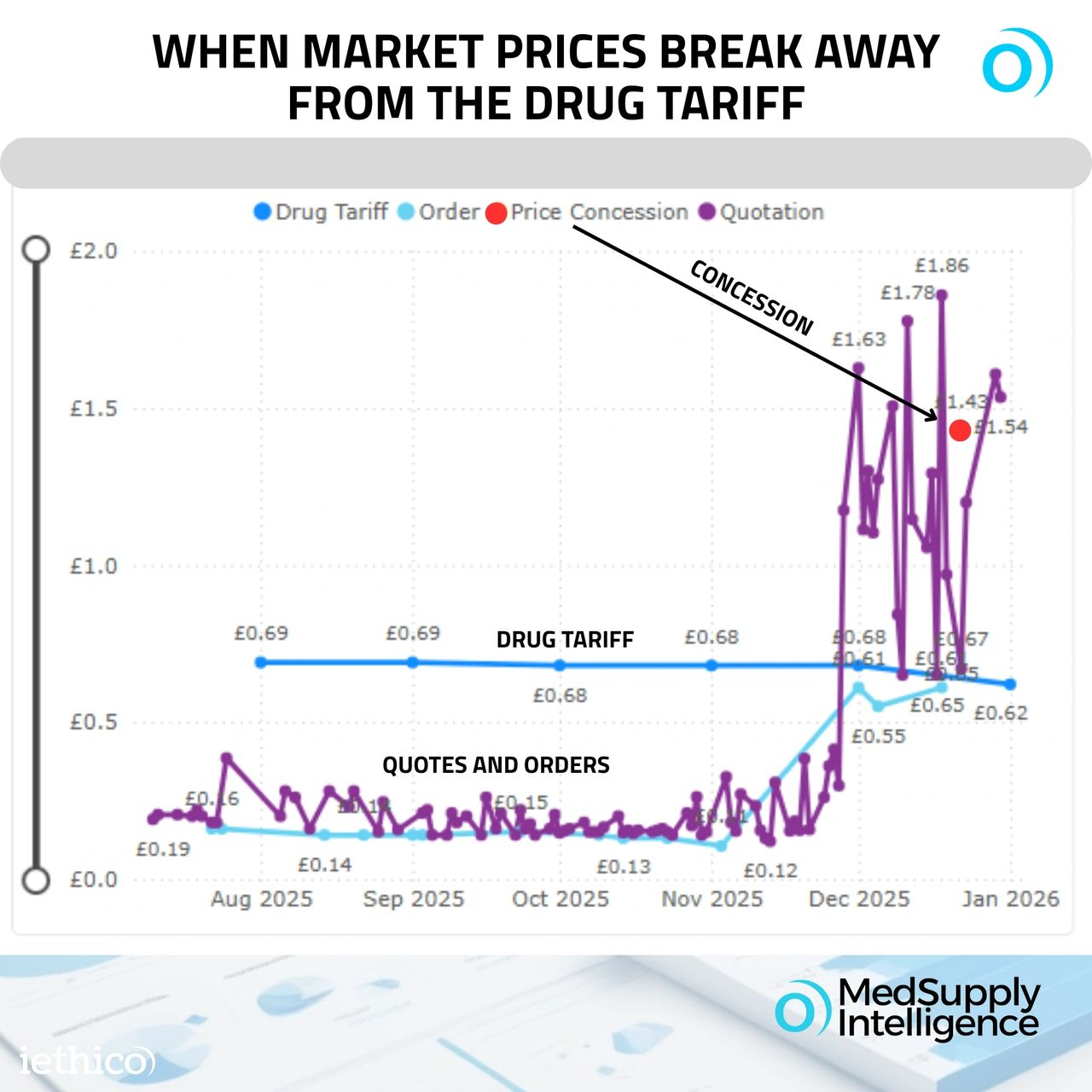
The signs were stark. Order prices, which had been stable at around £0.13–£0.16 in the preceding months, leaped to between £0.55 and £0.61 in December alone.
That is a five-fold increase in acquisition costs within a single month. Wholesalers issued out-of-stock notices across multiple strengths (10mg, 20mg, and 40mg), and pharmacy teams reported a sudden inability to obtain stock even at elevated prices.
Key Insights: Why the System Snapped
When we dug into the data, the story became less about one bad month and more about a system running on fumes.
Stable Demand, Unstable Supply
A common culprit for shortages is a sudden spike in prescribing, perhaps a new guideline or seasonal shift. That did not happen here. Primary care prescribing volumes for Citalopram remained flat. The clinical need was constant; the supply chain simply failed to meet it.
The Illusion of Supplier Diversity
On paper, the Citalopram market looks robust, with multiple marketing authorisations and suppliers. However, our assessment reveals that this diversity is often superficial. Most tablet products share the same salt form (citalopram hydrobromide), rely on common API sources, and utilise shared contract manufacturing arrangements. When manufacturing delays hit one, they hit many. The “broad” market was actually quite narrow at the operational layer.
Our Market is a Fragile Speedster
The UK generics market is built for one thing: speed. Specifically, the speed at which it can drive down prices. While that’s great for budgets, it has made the system incredibly brittle. There are no shock absorbers. The relentless pressure on price means no one keeps much buffer stock. When global supply tightened, our “efficient” market had nothing left to give, and it broke.
The Ripple Effect: Chaos for Everyone
A single medicine shortage doesn’t happen in a vacuum. It creates a domino effect of operational and financial headaches.
For pharmacies, it was a nightmare. Imagine trying to run a business where your main supplier triples the price of your key product overnight, but you’re not sure when (or if) you’ll be reimbursed for it. It turns every purchase into a gamble. This forces defensive ordering, which only makes the system-wide volatility worse.
For the NHS, the bill arrived promptly. The price concession for Citalopram 20mg tablets in December added about £0.51 million to the drug spend for that month alone. That’s half a million pounds spent not on innovation or better care, but on patching a hole in a leaky supply chain. It’s the financial equivalent of paying for express delivery because you forgot to post a letter for a month.
And for patients? The real-world consequence was anxiety and disruption. The last thing someone relying on daily medication needs is uncertainty about whether they can get it.
Lessons Learned: Building a Resilient Supply Chain
The 2025 Citalopram shock was a warning. To prevent recurrence, we must change how we view generic medicine supply.
We Need True Transparency
We cannot rely on the number of marketing authorisations as a proxy for resilience. Stakeholders need visibility into the actual manufacturing footprint—knowing which products share the same API source or production line. Without this, we are blind to the risks of concentration.
Pricing Stability Matters
Extreme price sensitivity creates a “race to the bottom” that hollows out the market. Manufacturers need predictable volumes to plan production. When prices swing violently, it discourages investment and leads to manufacturers exiting the market, leaving us with fewer, more fragile supply lines.
Buffers Are Essential
The “just-in-time” model is efficient for finance but dangerous for healthcare. The system needs better stock buffering capacity to absorb global manufacturing hiccups without triggering an immediate domestic crisis.
Looking Ahead: What to Expect in 2026
The immediate shock may have peaked in December, but the tremors will continue into early 2026.
Based on current manufacturing alerts and historical market behaviour, we predict that price concessions for Citalopram 20mg tablets will likely persist for another 1 to 3 months. We do not expect an immediate return to the low baseline prices of mid-2025. Instead, we anticipate a partial normalisation.
The supply of low-cost generics will likely remain intermittent. This means pharmacists and buyers should prepare for continued volatility rather than a smooth, straight-line recovery.
Don’t Get Caught in the Next Meltdown
The 2025 Citalopram shock was a masterclass in how a stable medicine can become unstable overnight. It showed that in today’s global supply chain, you’re either prepared or you’re a victim of the next crisis. Guessing isn’t a strategy.
Tired of flying blind and reacting to chaos? Maybe it’s time to see the market with the lights on.
Ready to see what’s coming next?
Schedule a personalised walkthrough of the MedSupply Intelligence solution and explore the medicines that matter to you. Uncover hidden risks in your supply chain, and stay one step ahead of the market.
Drop us an email support@iethico.com