 HRT Price Volatility: Why Global Supply Signals Matter
Recent price volatility in Hormone Replacement Therapy (HRT) products has left many pharmacy procurement teams scrambling. One day a product is available at a predictable price; the next, it’s a frantic search for stock at double the cost. This isn’t random chaos. It’s a predictable outcome of interconnected global supply chains.
Understanding these dynamics is no longer optional. This article will explore why proactive monitoring is essential for navigating the complexities of the modern pharmaceutical market. We will use a real-world example of an HRT product to show how early warning signs from international markets precede local disruptions, and how this insight gives you a critical advantage. The goal is to move from a reactive procurement model to a proactive, data-driven strategy.
The Problem: Price Volatility and Unpredictable Supply
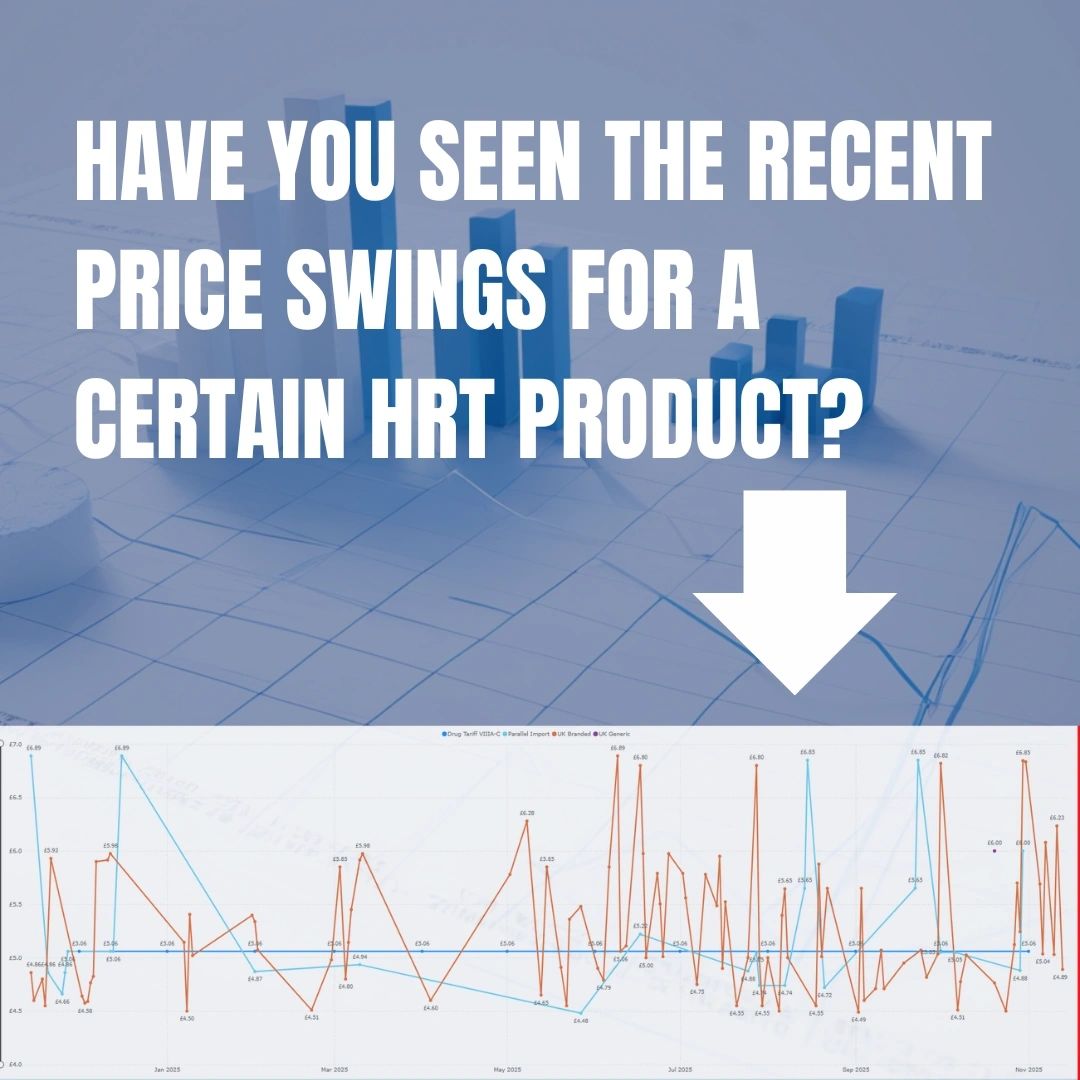
Many in the UK have noticed the recent and often dramatic price fluctuations for certain HRT products. A pharmacy might secure a product at a stable price one week, only to find it has skyrocketed the next, or that stock has vanished entirely. But why is this happening?
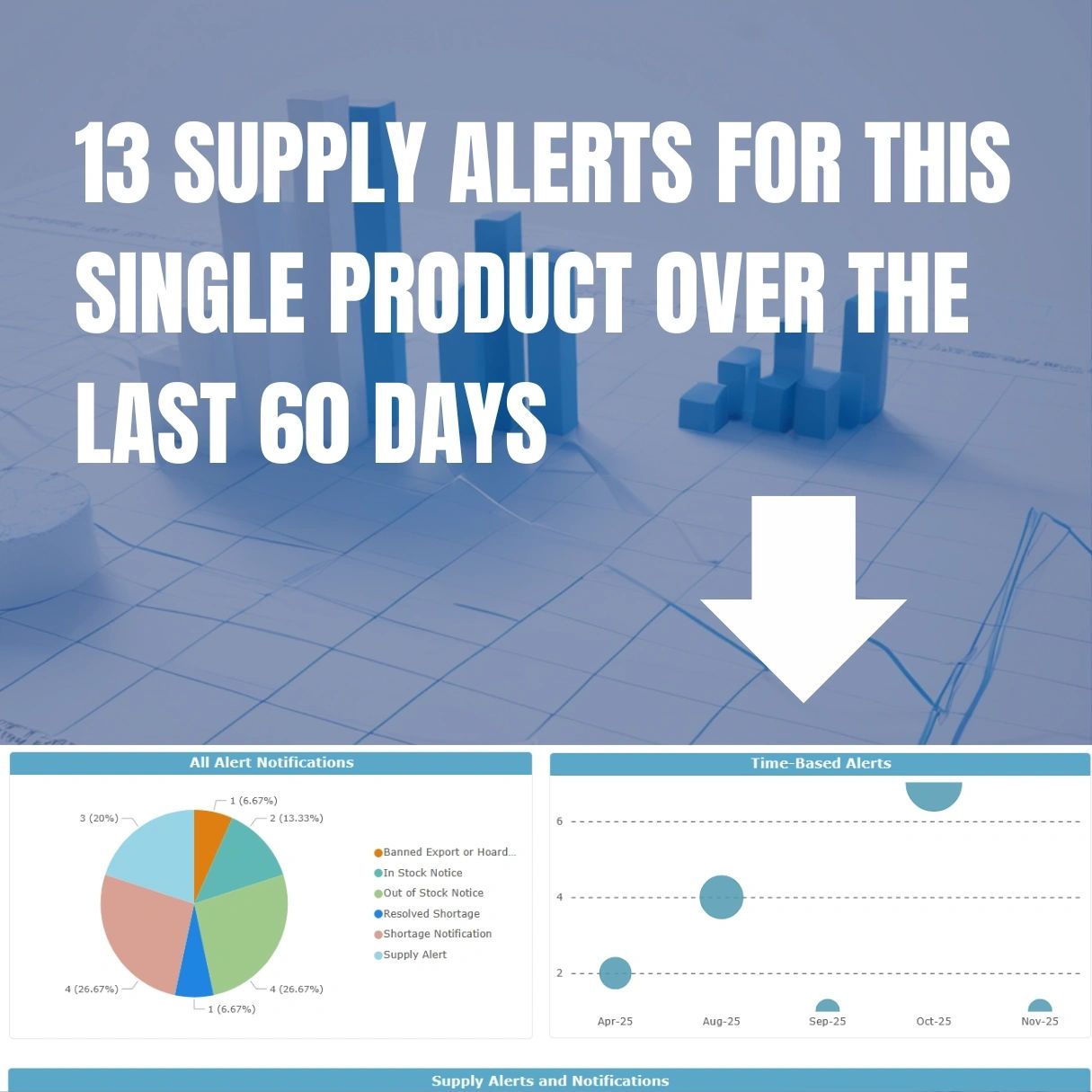
We recently investigated one specific HRT product experiencing this exact issue. What we found was a market in turmoil. Prices were all over the place, with huge variations between suppliers. The cause became clear when we looked at the supply data: this single product had triggered 13 different supply alerts over the last 60 days alone.
These alerts are the end result of a chain of events. They signal that a problem has already taken hold in the UK supply chain. For a procurement manager, an official shortage notification is a lagging indicator. It confirms a crisis you are already in the middle of. By the time you receive it, the opportunity to prepare has passed, leaving you to manage the fallout.
The Ripple Effect: How Global Events Impact Local Availability
The most interesting part of our investigation wasn’t the 13 recent alerts; it was what happened before them. The warning signs for this specific HRT product did not appear in the UK first. They started months earlier as a series of ripples in international markets.
We identified a clear pattern:
-
Initial Shortages Abroad: The first signals appeared as shortages flagged in the Netherlands, Ireland, and Australia.
-
Supply Chain Constriction: As these markets experienced difficulties, the global supply of the product began to constrict. Manufacturers may have reallocated stock, or underlying raw material issues began to surface.
-
UK Market Impact: The ripple eventually reached the UK. The initial shortages abroad translated into increased demand on remaining stock, manufacturing delays, and ultimately, the supply alerts and price volatility we see today.
This example is not unique. It demonstrates a fundamental truth of modern pharmaceutical procurement: what happens in one country today often predicts what will happen in another tomorrow. Global supply chains are so interconnected that a disruption on the other side of the world can directly impact your pharmacy’s ability to serve its patients.
From Reactive to Proactive: The Power of Monitoring
Relying on traditional supply routes and waiting for official notices is no longer a sustainable strategy. It puts your pharmacy in a constant state of reaction, forcing you to make last-minute decisions under pressure. This approach leads to:
-
Higher Costs: Paying premium prices for scarce stock erodes margins.
-
Wasted Time: Staff spend valuable hours searching for suppliers and alternative products instead of focusing on patient care and strategic tasks.
-
Reputational Risk: Inconsistent stock availability can damage patient trust and lead them to seek care elsewhere.
The alternative is a proactive approach grounded in real-time data monitoring. By tracking global signals, you can anticipate disruptions before they hit your local market. Imagine knowing about the shortages in the Netherlands and Australia weeks or even months before the price of that HRT product began to climb in the UK.
This foresight provides a critical advantage. It allows you to:
-
Secure Stock Early: You can adjust your purchasing strategy to secure inventory before the competition drives up prices.
-
Plan Alternatives: If a shortage seems inevitable, you have time to identify and source alternative products or strengths, ensuring continuity of care.
-
Optimise Budgets: By avoiding last-minute premium pricing, you can manage your procurement budget more effectively.
-
Strengthen Supplier Relationships: You can open conversations with suppliers from a position of knowledge, not desperation.
Implementing a Proactive Monitoring Strategy
Making the shift to a proactive model requires access to the right intelligence. A platform like MedSupply Intelligence is designed to provide this level of insight. It consolidates data from multiple sources including international markets, supplier communications, and pricing fluctuations into a single, actionable view.
Instead of your team manually trying to piece together information, the system does the heavy lifting. It flags the early warning signs, such as the initial HRT shortages in Ireland and Australia, and presents them as clear, timely alerts. This enables your procurement team to move from being firefighters to strategic planners. They can anticipate market movements and make informed decisions that protect your pharmacy from volatility.
This is the future of pharmacy procurement. It’s about using data to see around the corner, transforming uncertainty into a competitive advantage.
Conclusion: Take Control of Your Procurement
The recent volatility in HRT products is a clear signal that the old ways of managing pharmaceutical procurement are no longer sufficient. The market is too fast, too interconnected, and too unpredictable to rely on reactive measures.
By adopting a proactive monitoring strategy, you can protect your pharmacy from price shocks, ensure continuity of care for your patients, and operate with greater efficiency and confidence. The key is to see the ripples before they become a wave. Tracking global signals provides the foresight you need to navigate the complexities of the modern supply chain successfully.
Don’t wait for the next shortage to disrupt your operations. Start building a more resilient and intelligent procurement process today.
Want to see how this level of real-time tracking can benefit your team? Book a demo with us and discover how to stay ahead of the market.