A medicine shortage doesn’t begin with an official announcement. It starts with a series of small, disconnected signals that ripple across the global supply chain. For procurement and supply chain professionals in the pharmaceutical sector, waiting for a formal notice from an authority like the Department of Health and Social Care (DHSC) is a reactive strategy. By then, the market is already in motion, prices may be volatile, and securing stock becomes a frantic race against time. The real competitive advantage lies in identifying these early warnings and acting on them before they become a full-blown crisis.
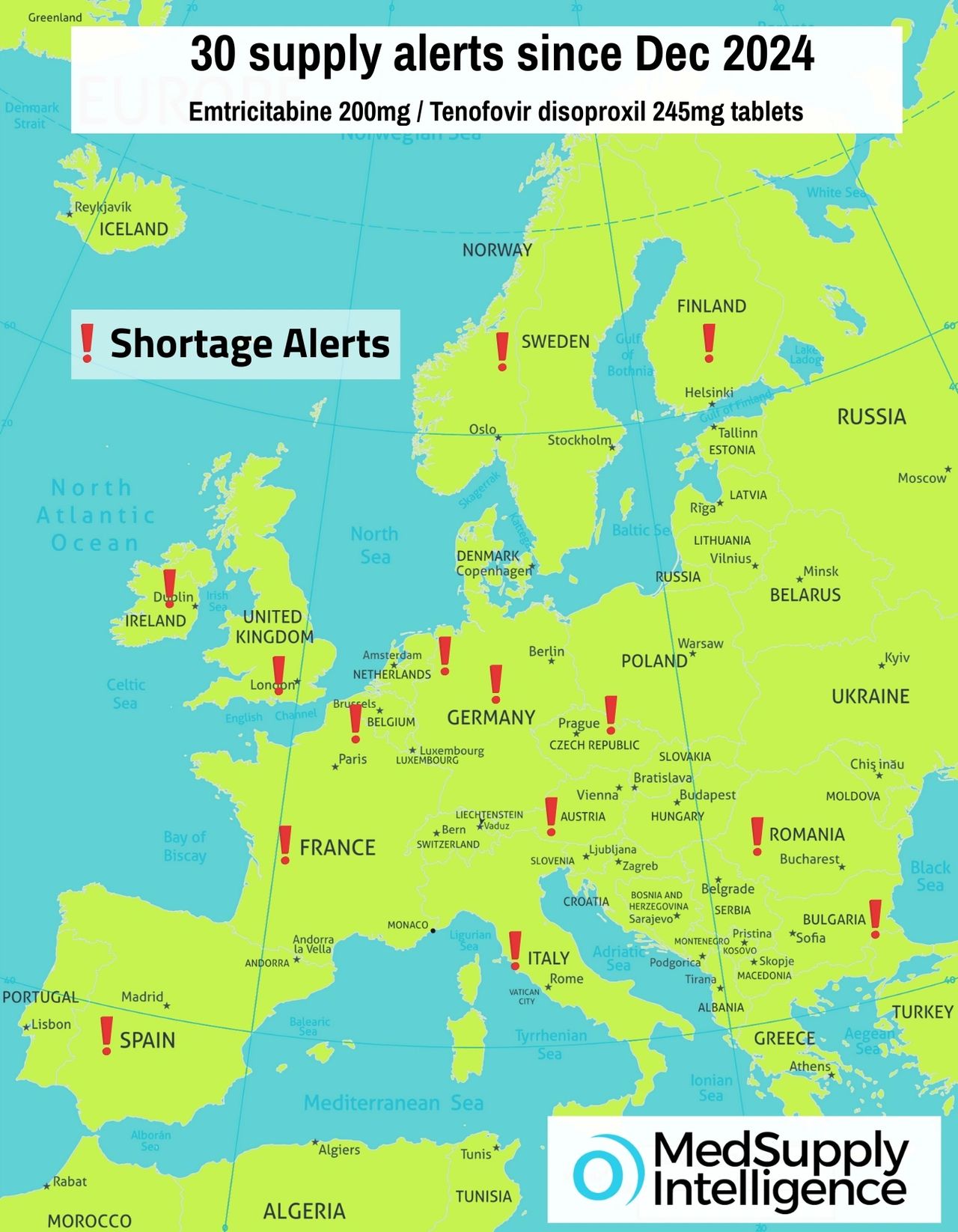
A compelling case study is unfolding right now with Emtricitabine 200mg / Tenofovir disoproxil 245mg tablets. While no official UK shortage notification has been issued, our market intelligence platform has captured 30 distinct supply alerts across Europe since December 2024. These data points paint a clear picture of escalating risk, revealing a pattern of disruption that proactive organisations can use to their advantage. This article breaks down the signals, what they mean for the supply chain, and the strategic actions you can take now to stay ahead.
Why Official Notices Lag Behind Reality
Regulatory bodies like the DHSC play a crucial role in managing public health communications. However, their process for issuing a medicine shortage notification is necessarily complex and evidence-based. It requires confirmed data from multiple sources, including manufacturers, wholesalers, and healthcare providers. This verification process, while vital for accuracy, creates a natural time lag.
During this gap between the first signs of trouble and an official declaration, several things happen:
-
Information Asymmetry: Manufacturers and distributors with direct visibility of the problem have an information advantage. They may begin to manage stock levels or adjust distribution strategies long before the wider market is aware.
-
Creeping Disruption: A manufacturing issue in one country can lead to increased demand in a neighbouring one, setting off a chain reaction. These are the subtle tremors that precede the earthquake.
-
Competitive Disadvantage: Companies relying solely on official bulletins are the last to know. They are left scrambling for alternative suppliers or paying premium prices, while competitors who acted on early intelligence have already secured their supply lines.
In short, official notices are lagging indicators. They confirm a problem that has already taken root. True market intelligence provides leading indicators, allowing you to see the future of the supply chain before it arrives.
The Emtricitabine/Tenofovir Signal Timeline: A Story of Escalating Risk
The 30 alerts we have tracked for Emtricitabine/Tenofovir tablets tell a coherent story. What began as an isolated report of increased demand has snowballed into a multi-faceted international supply issue involving manufacturing, API shortages, and logistics.
Here is a condensed timeline of the signals our platform has captured:
-
December 2024: The first signal appears. Germany reports a shortage notification due to a sudden increase in demand.
-
February 2025: Finland follows, issuing its own shortage notification.
-
March 2025: The problem broadens. The Czech Republic reports a shortage caused by a manufacturing issue, while Austria and Sweden also issue notifications.
-
April 2025: The situation deteriorates as core production problems emerge. Belgium cites an API shortage and manufacturing issues. Ireland and Romania report shortages linked to manufacturing difficulties.
-
June 2025: Major markets France and Spain issue shortage notifications, signalling significant European disruption.
-
July 2025: Germany reports a second shortage notification, indicating the initial demand issue is unresolved.
-
August 2025: The issues diversify. Germany reports a third disruption. Ireland cites distribution and logistics issues, while Italy experiences shortages from increased demand.
-
September 2025: The risk intensifies and moves closer to the UK. A UK manufacturer reports being out of stock (OOS) with no resupply date. Meanwhile, France’s shortage is ongoing, and Bulgaria and the Netherlands report new shortages.
-
October 2025: The impact becomes critical. Ireland and Italy report further shortages. Crucially, UK pharmacies begin reporting that their suppliers are out of stock. In a rare piece of good news, France announces its shortage is resolved, but the wider European picture remains fragile.
What These Signals Indicate for Procurement Teams
This timeline is more than a list of events; it’s a roadmap of supply chain failure. By categorising the alerts, procurement professionals can understand the nature of the risk and anticipate its next move.
1. Demand Spikes
The initial alerts from Germany and later Italy point to market dynamics that outpace supply. This could be due to a competitor’s product shortage, changes in clinical guidelines, or successful tender bids. A demand-led shortage is often a precursor to wider issues as manufacturers struggle to scale production.
2. API and Manufacturing Bottlenecks
The alerts from the Czech Republic, Belgium, Ireland, and Romania are the most concerning. They signal a fundamental breakdown at the source of production. API shortages can take months to resolve, and manufacturing line failures can halt supply entirely. When multiple countries cite these reasons, it points to a systemic weakness in the production network for that specific product.
3. Logistics and Distribution Failures
The August alert from Ireland regarding distribution and logistics highlights a different vulnerability. The product may exist, but it cannot get to where it needs to go. This can be caused by transport issues, warehousing problems, or regulatory hurdles at borders. It’s a reminder that the supply chain is a physical entity, not just a series of transactions.
The final alerts in October, a UK manufacturer with no resupply date and pharmacies unable to get stock are the final confirmation. The upstream signals have now fully translated into downstream scarcity.
Proactive Steps to Secure Your Supply Chain
Armed with this type of forward-looking intelligence, procurement and supply chain teams can shift from a reactive to a strategic posture. Instead of waiting for the problem, you can prepare for it.
Here are actionable steps to take now:
-
Conduct a Risk Assessment: Immediately assess your current stock levels and your reliance on this product. Map your primary and secondary suppliers and identify their geographic locations in relation to the reported disruptions.
-
Initiate Supplier Dialogue: Contact your suppliers to inquire about their stock situation and supply chain visibility. Ask specific questions based on the intelligence you have. Are they aware of the manufacturing issues in Belgium or the logistics problems in Ireland? Their answers will reveal their level of preparedness.
-
Explore Alternative Sourcing: Begin qualifying alternative suppliers, even if you don’t need them immediately. The lead time for onboarding a new supplier can be significant, so starting the process early is critical.
-
Adjust Inventory Strategy: Consider increasing your safety stock levels for this and related products. A short-term increase in carrying costs is a small price to pay to avoid a major stockout.
-
Model Scenarios: Use the intelligence to model different scenarios. What is your contingency plan if your primary UK supplier cannot resupply for three months? What if demand in Europe pulls more stock away from the UK market?
The Power of Real-Time Market Intelligence
This entire strategic process is powered by one thing: access to timely, accurate market intelligence. A subscription to a global supply intelligence platform transforms your procurement function from a cost centre into a source of strategic advantage.
Subscribers gain access to:
-
Real-Time Alerting: Receive immediate notifications on supply chain events as they happen, not weeks or months later.
-
Regional and Global Insights: See the full picture, from an API issue in one country to a demand spike in another, and understand how they connect.
-
Forward Indicators: Leverage data analytics to identify trends and receive predictive insights, allowing you to anticipate shortages before the first signal even appears.
The story of Emtricitabine/Tenofovir is a clear lesson in the value of foresight. The signals of this shortage have been visible for nearly a year. Don’t wait for the next official notice to find yourself on the back foot.
Secure your supply chain and protect your competitive edge. Contact us today to learn how our real-time intelligence platform can give you the foresight to act before a problem becomes a crisis.