Continuation of: Navigating Supply Chain Volatility (14 November 2025)
In November 2025, we examined the emerging instability in Propranolol modified-release (MR) products. At the time, the disruption appeared concentrated in specific MR strengths.
What the subsequent data now shows is more revealing.
The instability did not resolve.
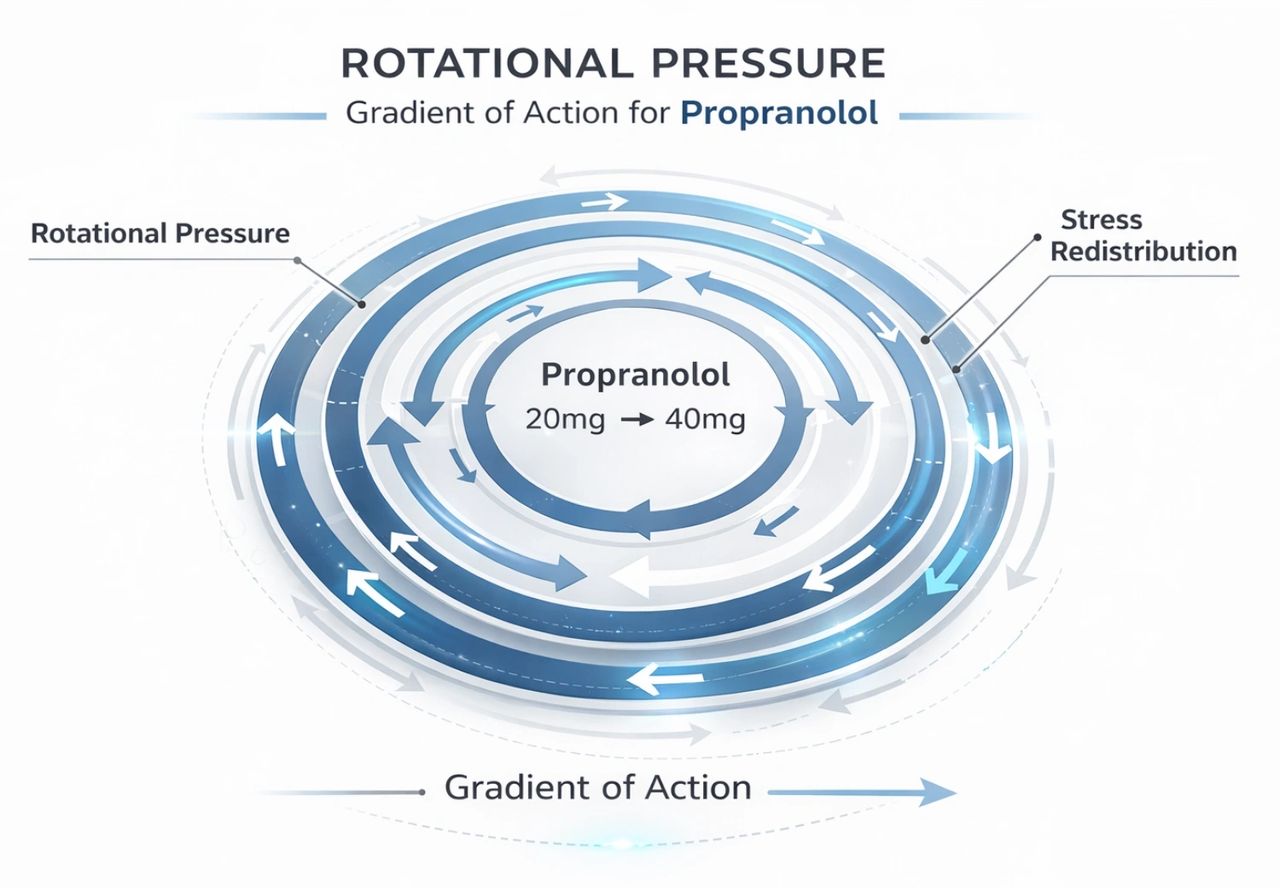
It rotated.
This update positions Propranolol not as a single shortage event, but as a structural case study in rotational pressure dynamics.
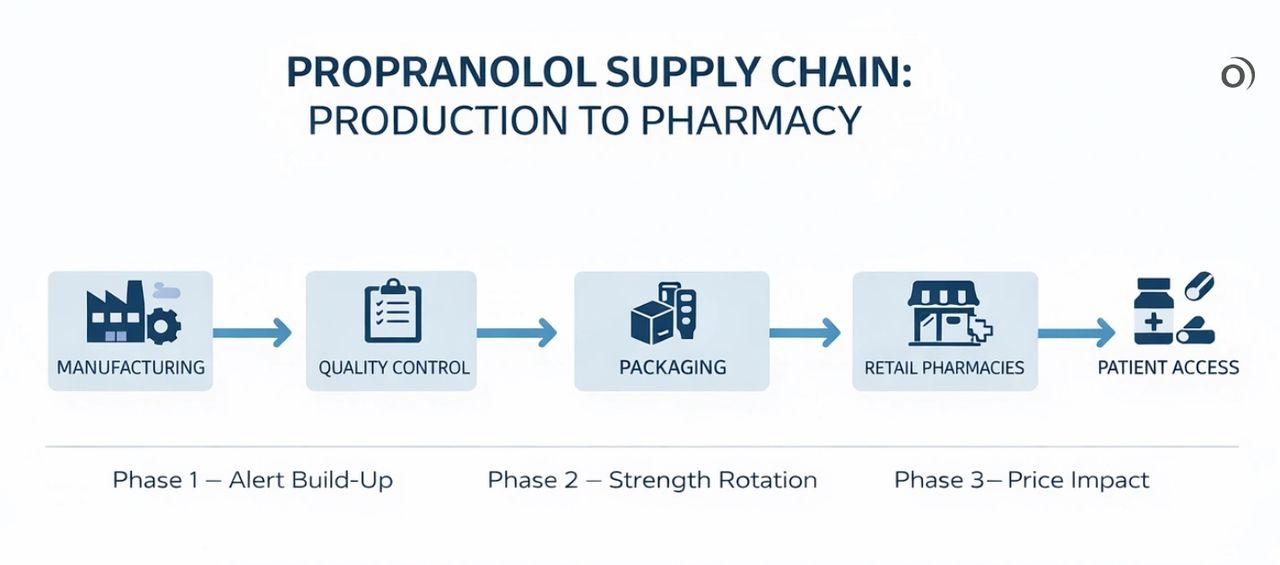
Phase 1: Alert Density Builds Before the Event
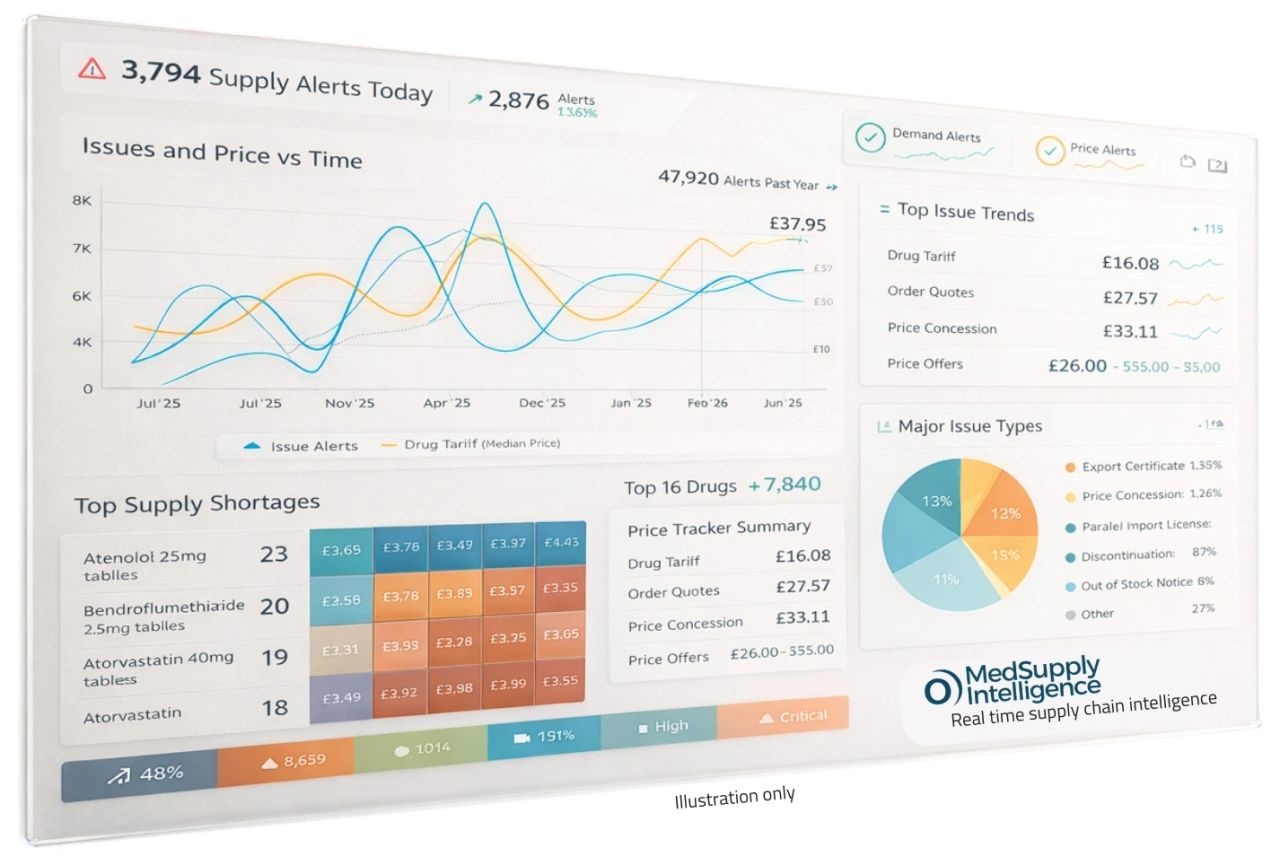
Prior to formal constraint, alert frequency had already accelerated materially across the molecule.
In the months following our original insight, alert density increased further and remained elevated into winter - rather than reverting toward baseline.
More importantly:
The highest concentration of alerts is no longer confined to modified-release presentations.
Pressure has redistributed.
Phase 2: Concentration Shifts to Substitute Strengths
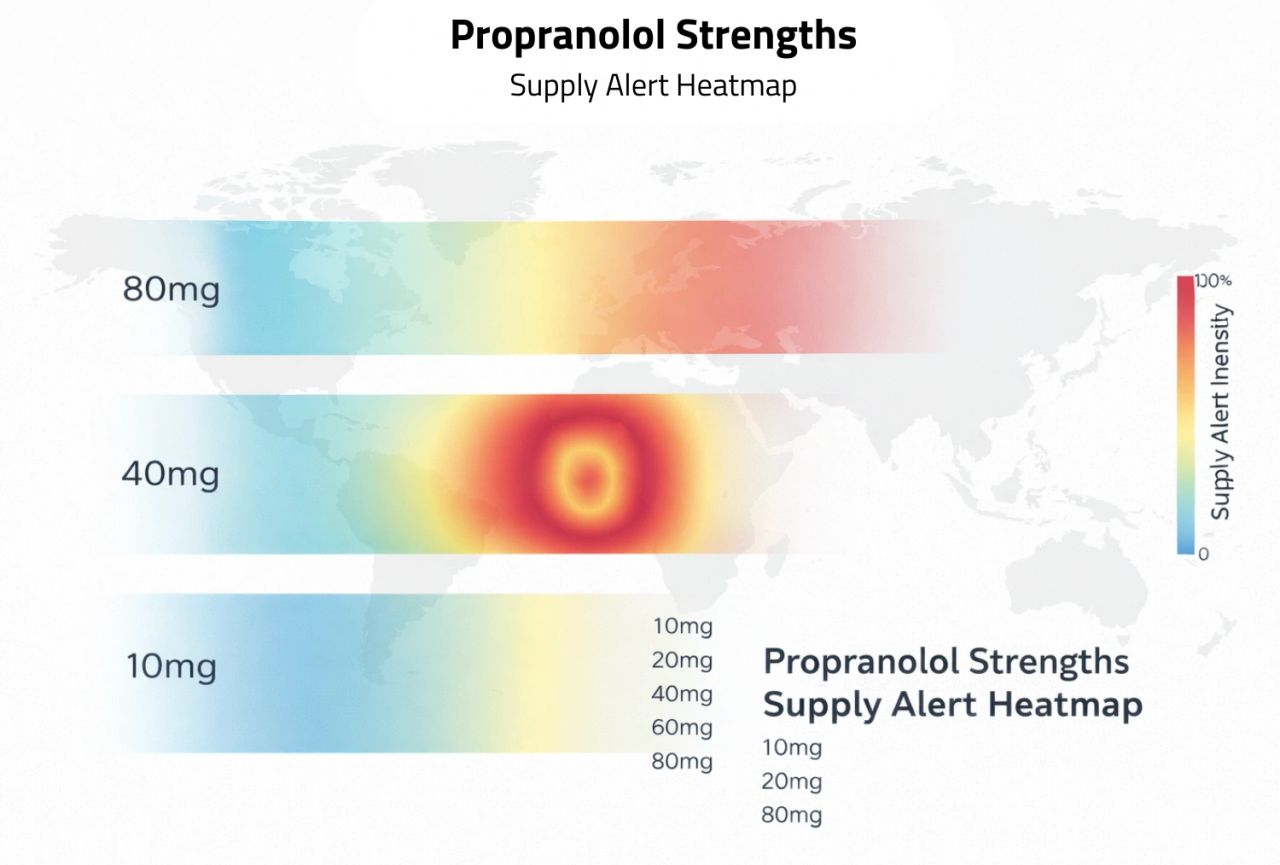
Over the last quarter, alert concentration has shifted decisively into 40mg tablets, which now represent the largest share of recent notifications across the molecule.
Relative to its pre-disruption baseline, alert frequency in 40mg has increased materially.
At the same time:
-
Modified-release strengths remain among the highest-volatility segments.
-
Immediate-release alternatives have not fully stabilised.
This pattern is significant.
In resilient markets, substitution disperses stress.
In compressed markets, substitution relocates it.
Phase 3: Wholesale Clearing Trades at Multiples of Tariff
Pricing data reinforces that this is not simply a volume story.
Across the modified-release strengths:
-
Wholesale clearing has traded at sustained multiples of published Drug Tariff.
-
Concessions have adjusted upward, but often after wholesale dislocation has already occurred.
-
Quotation dispersion remains elevated relative to historical norms.
In practical terms:
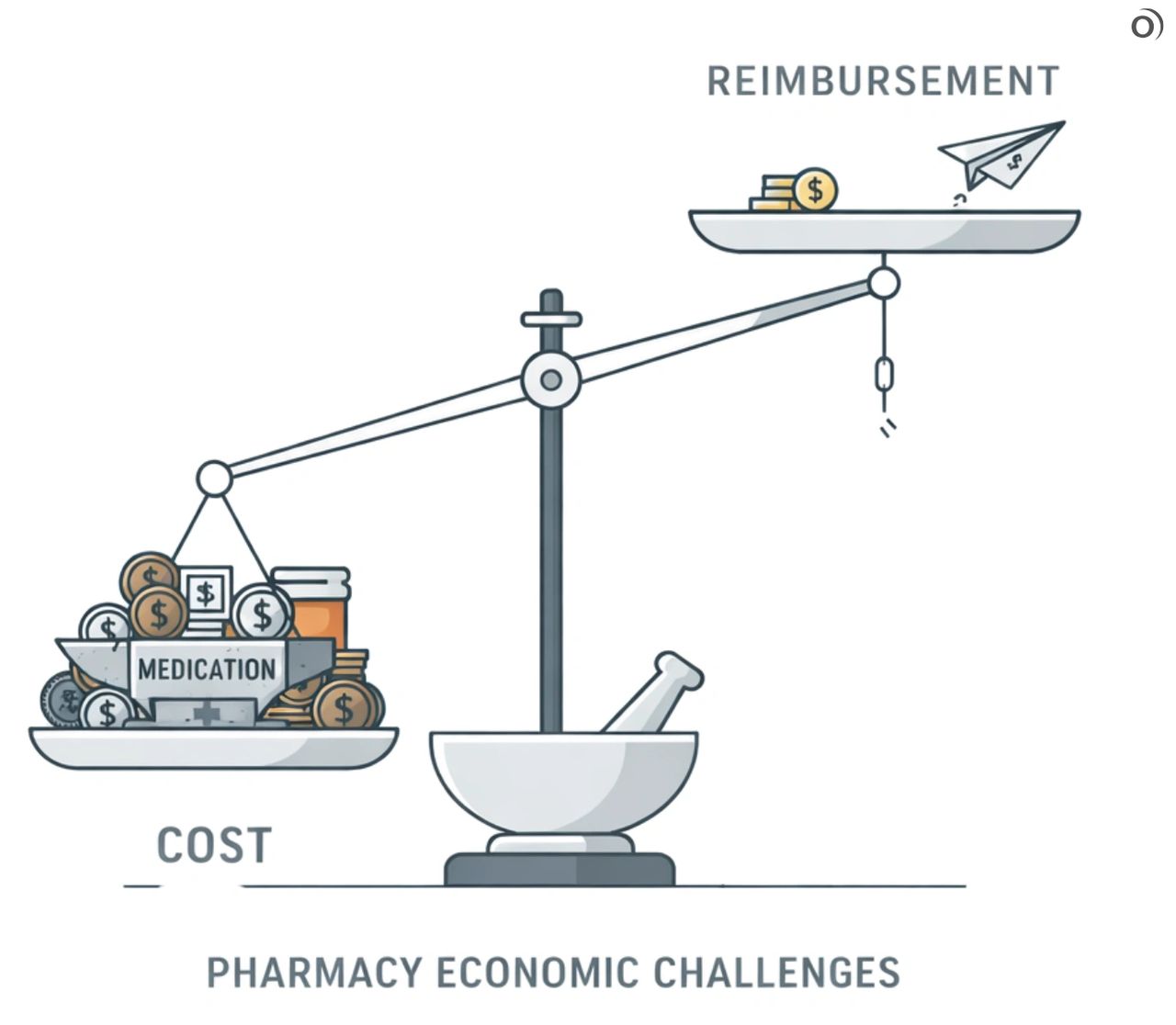
Acquisition costs have exceeded reimbursement for sustained periods.
Pharmacies are absorbing the gap.
While 40mg tablets have shown some recent price softening, that easing followed a period of elevated alert concentration and volatility.
The stress did not resolve. It redistributed.
The Structural Sequence Now Visible
Propranolol now demonstrates a repeatable pattern:
-
Alert density accelerates.
-
Constraint emerges in a specific strength.
-
Demand redistributes into substitutes.
-
Alert concentration rotates.
-
Wholesale clearing detaches from tariff.
-
Reimbursement reacts.
-
Loss-making dispensing persists.
The system oscillates rather than equilibrates.
This is rotational pressure.
Why This Matters Beyond One Molecule
Rotational pressure dynamics tend to emerge where:
-
Supplier redundancy is thin.
-
Margins are structurally compressed.
-
Substitution is clinically viable.
-
Reimbursement adjusts reactively.
-
Economic tolerance across the chain is limited.
Under those conditions, instability does not dissipate.
It migrates.
The Propranolol case shows that once a molecule enters this cycle, volatility can persist across multiple strengths even after the original disruption window closes.
From Event to Mechanism
The November notice marked the beginning of visible disruption.
The subsequent data reveals the structural mechanics beneath it.
Propranolol has moved from shortage episode to diagnostic example.
The key insight is not that one strength was constrained.
It is that the molecule has demonstrated rotational instability under economic strain.
Where margins are compressed and buffer capacity is thin, shocks are rarely absorbed.
They are redistributed.
Understanding that redistribution early is the difference between reacting to shortages and diagnosing fragility.