Duloxetine Supply Crisis: Global Shortages & UK Risk Analysis
For millions of patients, Duloxetine is a daily necessity for managing depression, anxiety, and neuropathic pain. However, for healthcare professionals and procurement teams, this widely prescribed medicine has become a source of escalating concern. What began as isolated recalls has mutated into a synchronized global supply failure.
The data is stark: over the last two years, persistent quality failures, manufacturing disruptions, and long-term shortages have rippled across Europe, North America, and Asia. The crisis is no longer just a possibility, it is a structural reality.
This analysis explores the anatomy of the Duloxetine shortage, uncovering the repetitive patterns that predict market failure and explaining why the UK health system is now approaching a critical tipping point.
Executive Summary: A System Under Stress
Duloxetine is exhibiting clear signals of profound supply-chain fragility. What we are witnessing is not a series of unfortunate, unconnected events, but a systemic collapse driven by a convergence of risks.
From 2023 to 2025, global data reveals a consistent narrative:
-
Widespread Recalls: Contamination issues have triggered product withdrawals in over 10 countries.
-
Synchronised Stress: More than 15 nations are reporting simultaneous shortages.
-
Manufacturing Bottlenecks: A concentrated production base means a failure at one site impacts dozens of “competitor” brands.
For the NHS, this presents a growing strategic challenge. Demand is rising sharply just as global manufacturing resilience is shrinking, leaving the UK vulnerable to a significant supply gap in the near term.
Key Findings: The Drivers of Instability
1. Global Recalls are Persistent
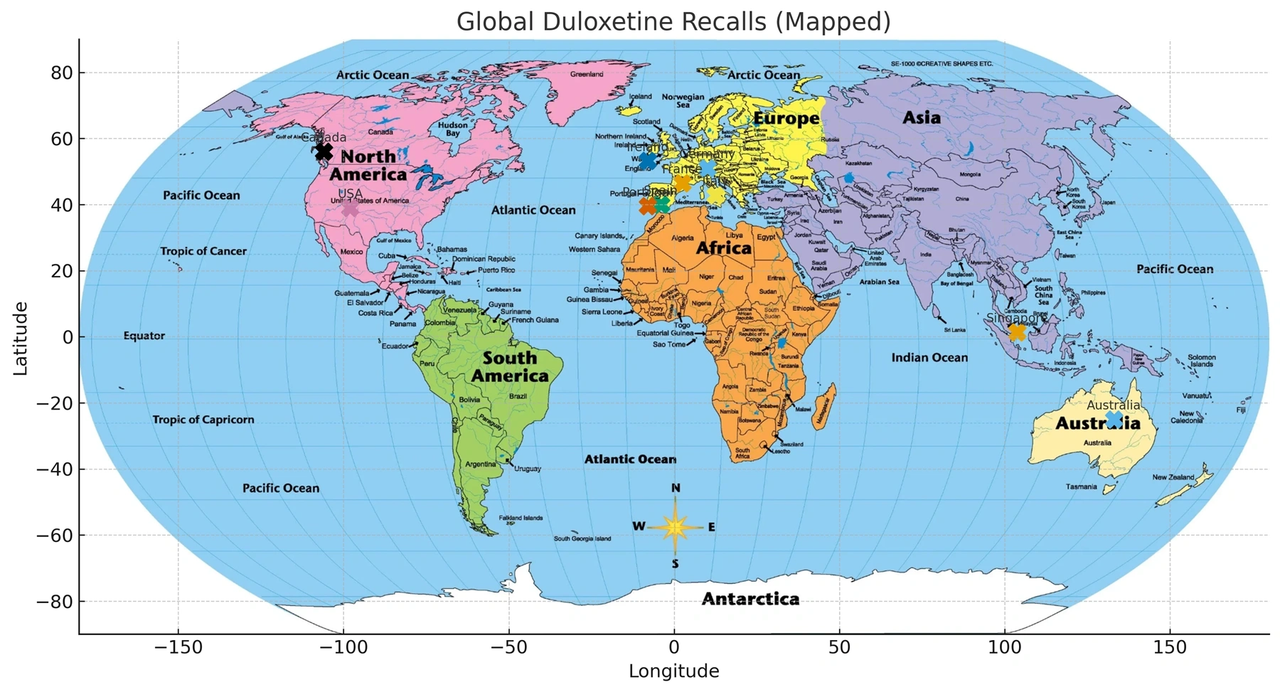
Since 2023, Duloxetine products have been recalled in major markets including Germany, France, Spain, the USA, Canada, and Australia. The primary culprit is N-nitroso-duloxetine contamination. These are not isolated incidents but trace back to a highly concentrated upstream manufacturing base, largely located in Spain and India.
2. The “Chemistry Problem”
Duloxetine carries an intrinsic chemical risk. The molecule contains a secondary amine functional group which can react with trace nitrites to form nitrosamines. This means the risk of contamination can be minimised but never fully eliminated. Consequently, the supply chain is permanently susceptible to regulatory scrutiny and quality-related stoppages.
3. Superficial Supplier Diversity
On paper, the UK market appears robust, with multiple Marketing Authorisation (MA) holders such as Amarox, Tillomed, and Dr Reddy’s. However, intelligence reveals that many of these suppliers rely on the same few upstream manufacturing facilities. If one factory in Spain fails, it doesn’t just affect one brand; it removes a massive slice of the total market capacity simultaneously.
4. Surging UK Demand
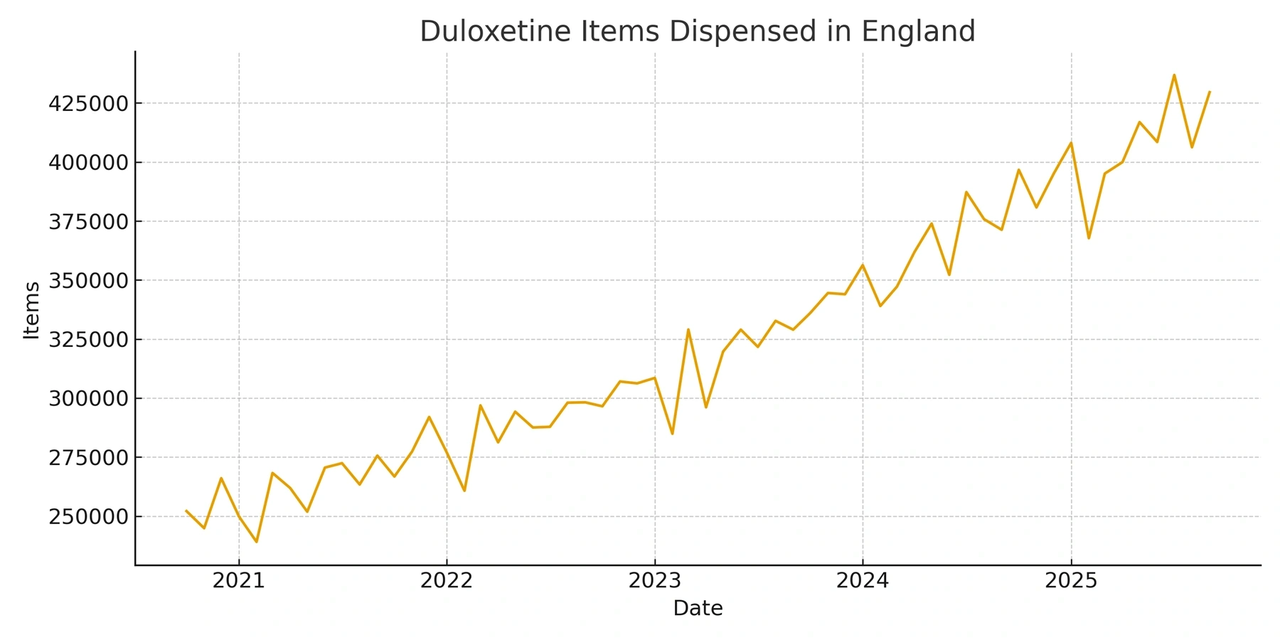
While supply tightens, demand is accelerating. Primary care prescribing in England has jumped by approximately 70% since 2020, with over 430,000 items now dispensed monthly.
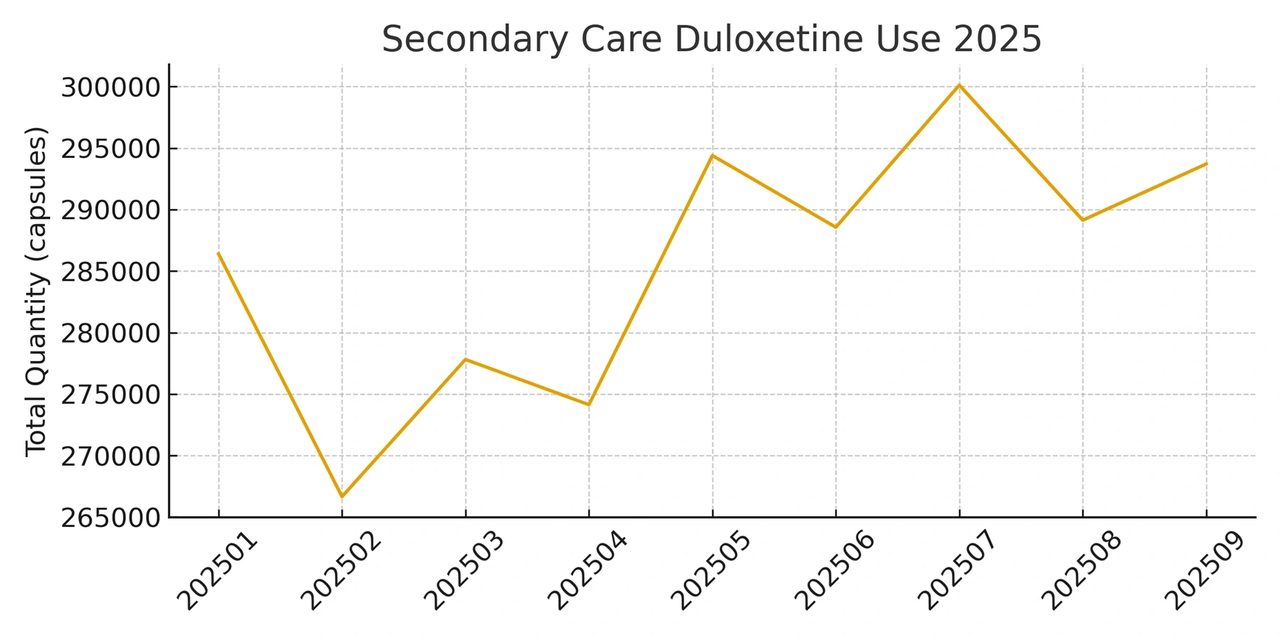
Secondary care adds substantial additional volume. We are increasingly dependent on a medicine that is increasingly difficult to source.
The “Wave Pattern”: Predicting the Crash
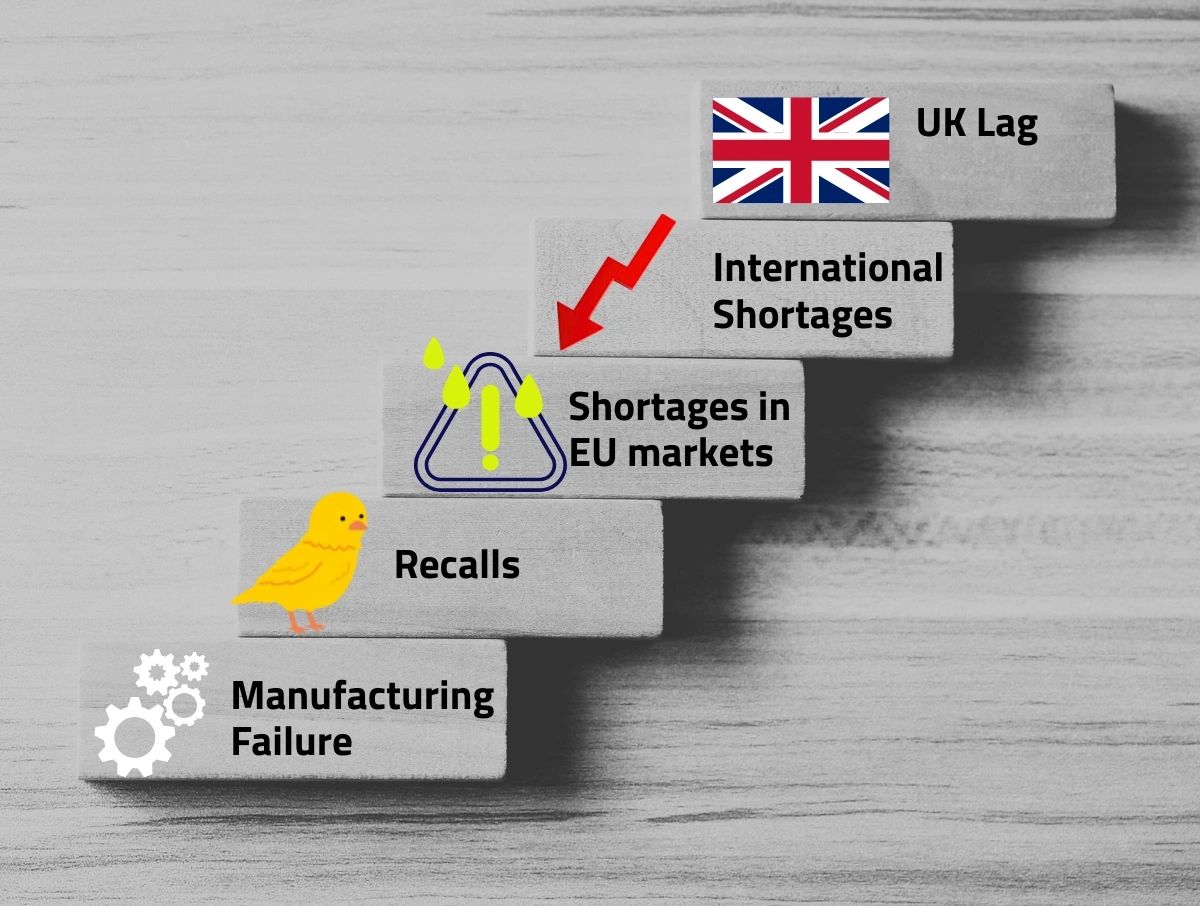
One of the most critical insights from our analysis is that Duloxetine shortages are following a predictable, repeatable “wave pattern.” This sequence has been observed in previous crises involving Ranitidine and Valsartan.
Step 1: Manufacturing Failure
Quality failures emerge at the source, typically in Spanish manufacturing hubs (e.g., Towa, Lesvi) or Indian API sites.
Step 2: The Canary in the Coal Mine
Recalls begin in smaller EU markets like Ireland, Portugal, and Finland. These regulators often detect batch variances early.
Step 3: Major Market Strain
Larger markets like Germany, France, and Italy report shortages. With high demand and robust pharmacovigilance, these nations drain available European stock quickly once quarantines begin.
Step 4: International Contraction
Non-EU markets like Canada and Singapore react. As global batches are quarantined, international distribution routes collapse inward.
Step 5: The UK Lag
The UK is often a late recipient of these shocks. Instead of immediate recalls, we see early warning signs: price concessions, wholesaler “out of stock” alerts, and reduced allocations. These signals have already appeared repeatedly in 2024 and 2025.
UK-Specific Risks: The Warning Lights Are Flashing
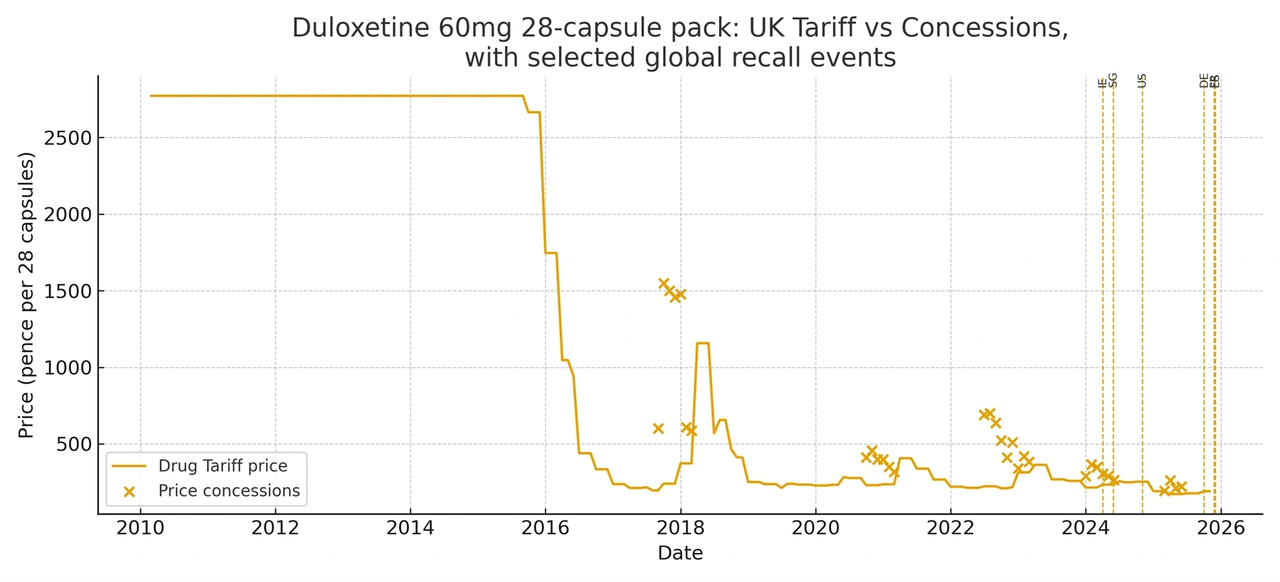
UK is structurally vulnerable. As a “price-taker” market with a rigid Drug Tariff system, the UK is often de-prioritised by global suppliers in favour of higher-margin territories during a shortage.
Several indicators suggest the UK is entering the danger zone:
-
Pricing Spikes: Duloxetine has required repeated price concessions since 2017, with notable spikes coinciding with global recall waves. This confirms that pharmacies cannot source stock at standard Tariff prices.
-
Wholesaler Gaps: Reports of “delayed delivery” and “reduced allocation” are becoming frequent.
-
No Major Recall… Yet: Historically, the UK experiences stock-outs before official recalls because wholesalers run dry and parallel imports are diverted to more profitable markets.
Deep Dive: Supplier and Regional Activity
The crisis is not affecting all players equally. Our data highlights specific areas of stress:
-
Supplier Volatility: Major suppliers like Accord Healthcare and Viatris have featured heavily in alert data, oscillating between “out of stock” and intermittent supply. Eli Lilly’s withdrawal of flagship brands (Cymbalta, Yentreve) in multiple regions has removed a vital safety valve, forcing generic manufacturers to absorb unsustainable demand.
-
Regional Hotspots:
-
Germany is seeing long-term unresolved shortages, with some resolution dates pushed to mid-2026.
-
Italy is battling manufacturing-led regulatory notifications.
-
Australia has seen mass discontinuations due to “commercial viability,” removing over 30% of available generic pack sizes.
-
Forecast: Is a Shortage Inevitable?
Modelling the data, aligning recall dates, shortage sequences, and manufacturing dependencies suggests the probability of a significant UK shortage within the next 6 to 12 months is high (>70%).
The pattern seen internationally is now at the UK’s doorstep.
Without intervention, we expect to see escalating price concessions, pharmacy-level stock-outs, and instability in hospital procurement.
Actionable Insights for Stakeholders
MedSupply Intelligence is purpose-built to help procurement teams, pharmacists, and policymakers navigate the chronic disruptions facing medicines like duloxetine. Our solution takes the guesswork out of supply chain risk management by delivering all the strategic actions you need in one place:
-
Eliminate Inefficient Buying: Stop wasting time on short-term spot-buying. MedSupply Intelligence enables long-term risk mitigation with real-time visibility into shortages, recalls, and market trends, so you can plan ahead with confidence.
-
True Supply Chain Transparency: Go beyond surface-level diversity. Our platform reveals the actual manufacturing sources behind every supplier, allowing you to assess and avoid hidden points of failure.
-
Global Early Warning Signals: Don’t wait for national alerts. MedSupply Intelligence continuously tracks and analyzes recall and shortage data across regions, including small EU markets serving as your early-warning system for developing international risks.
-
Support for Clinical Pathways: Arm clinical teams with rapid insights into emerging threats and alternative treatment options, ensuring continuity of care even as the market evolves.
MedSupply Intelligence empowers you to move from crisis response to proactive risk management.
Sign up and gain the intelligence advantage you need to protect your patients, business, and supply chain. By understanding the global signals, we can move from reacting to crises to predicting and mitigating them.