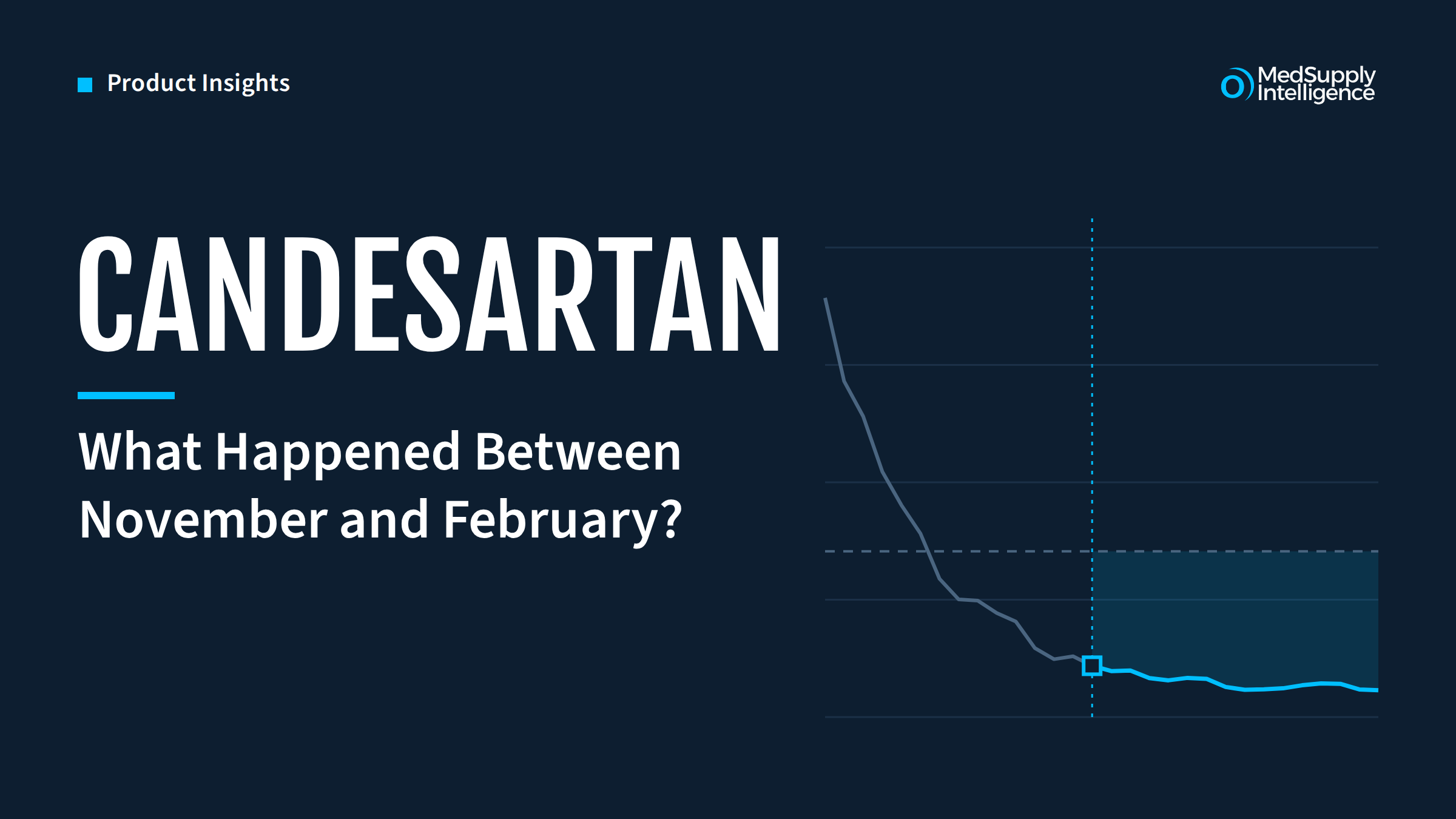
During November 2025, Candesartan 8mg tablets generated multiple shortage notifications.
At the time, acquisition costs remained relatively stable at approximately £0.33 per pack and supply remained available through normal channels.
By February 2026, the position looked different.
Supply alerts had begun to emerge and acquisition costs had increased to approximately £0.50 per pack. Activity was no longer limited to a single presentation, with signals beginning to appear across the wider Candesartan range, including 4mg, 16mg and 32mg tablets.
The timeline itself is notable.
The first notifications appeared months before broader market concerns became visible. During that period, pricing changed, supply conditions evolved and activity extended beyond the original strength.
Individually, each observation could be dismissed as routine market movement.
Together, they form a sequence that is familiar to anyone monitoring medicines supply closely.
The question is not whether a product eventually becomes difficult to source.
The more interesting question is what happens beforehand.
For procurement teams, the value often lies within that interval: the period between the earliest signs of market activity and the point at which disruption becomes widely recognised.
In the case of Candesartan, that interval lasted several months.
The notifications, pricing movement and expansion of activity across strengths did not occur simultaneously. They emerged over time, creating a timeline that is difficult to see when events are viewed in isolation.
As medicines markets continue to experience volatility, understanding those timelines may be just as important as understanding the shortages themselves.