Continuation of: The Real Cost of Waiting (8 November 2025)
23 February 2026 | Insights
To truly manage risk in medicine supply chains, it’s essential to look beyond official notices and understand the entire lifecycle of disruptions—before, during, and long after they’re announced.
Recent analysis of the antiarrhythmic drug Amiodarone reveals a compelling narrative that challenges conventional wisdom. The journey of this single molecule demonstrates that supply chain instability has a long, predictable lead-in and an equally persistent tail. The official notice is not the end of the disruption; in many ways, it’s just the middle. By examining the patterns before and after the notice, we can build a new framework for navigating the complexities of modern medicine procurement.
The Myth of the Main Event: Why Declarations Don’t Equal Equilibrium
A common assumption is that once a Medicine Supply Notification (MSN) is issued, the market begins to normalise. The problem is officially recognised, and the system adjusts. However, a deeper look at the data paints a very different picture. The period after an official notice is often characterised by continued, and sometimes even heightened, volatility.
 The New Reality of Medicine Supply Chains: Beyond the Notice
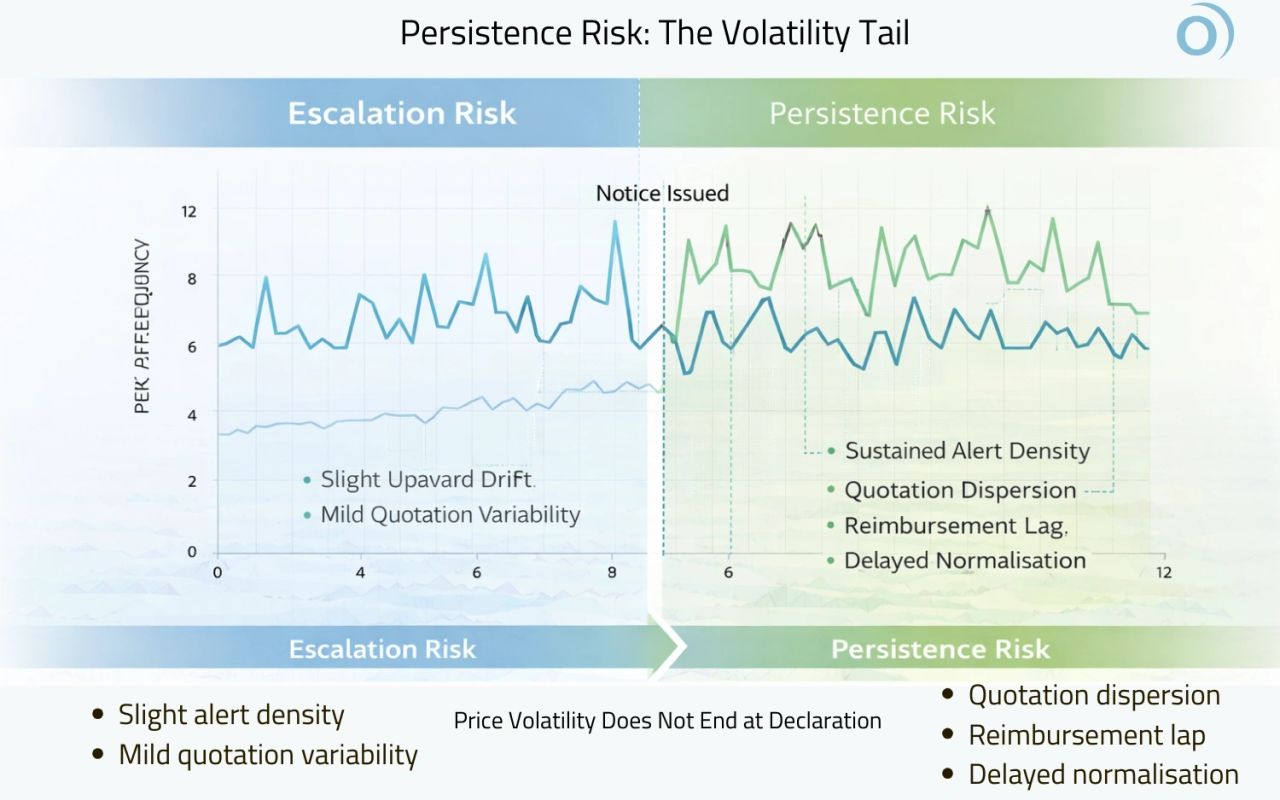
Our analysis shows that for Amiodarone, the number of supply-related alerts actually peaked three months after the official UK notice was issued in late 2025. January 2026 saw a dramatic spike in alerts from across the supply chain, from wholesalers to community pharmacies. This reveals a critical insight: a declaration does not mean equilibrium. The underlying pressures that caused the initial shortage often continue to ripple through the system for months.
This post-notice volatility has significant financial consequences. While the official drug tariff price may remain stable, the reality on the ground is one of scarcity and price hikes. In the months following the official notification for Amiodarone, market quotation prices fluctuated wildly, at times reaching nearly double the baseline tariff price. This demonstrates that the economic risk doesn’t disappear once a notice is published. Procurement teams who relax their vigilance after an MSN is issued are left exposed to significant, unbudgeted costs.
Seeing the Full Lifecycle: From First Signal to Lingering Risk
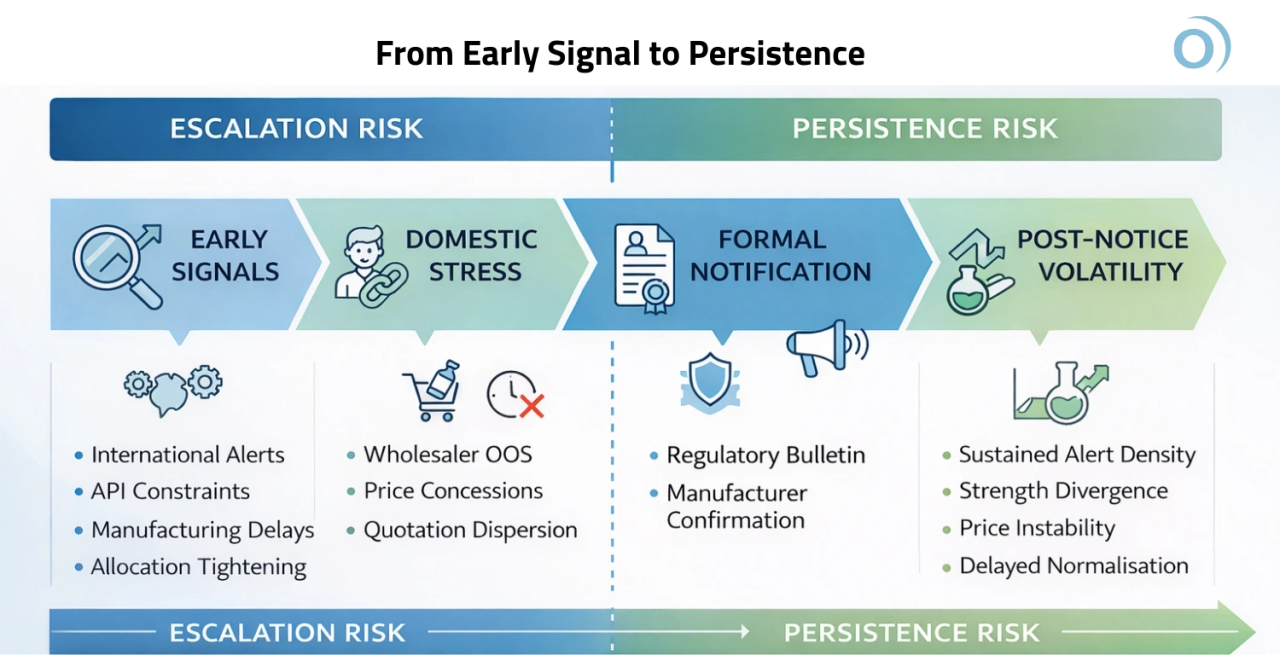
The story of Amiodarone’s instability didn’t begin with the official UK notice. The first faint signals appeared seven months earlier, with alerts emerging from other European markets. These early international warnings were followed by domestic indicators, including a rise in ‘out of stock’ occurrences at UK wholesalers and the granting of price concessions, a clear financial signal that the supply chain was under stress.
This progression follows a clear pattern:
-
Early International Signals: Disruptions often start in one market before spreading globally. In this case, initial alerts from Denmark and Italy were the first clues.
-
Domestic Stress Indicators: Rising ‘out of stock’ trends and official price concessions confirmed that the problem was affecting the UK.
-
Formal Notification: The official MSN confirmed the crisis, but it arrived long after the market dynamics had already shifted.
-
Post-Notice Volatility: A period of sustained alert activity and price instability followed the official notice, showing the crisis had a long tail.
 The New Reality of Medicine Supply Chains: Beyond the Notice
Collectively, this timeline proves that drug shortages are not sudden events. They are lifecycle processes. The period before the notice offers a window for proactive sourcing and strategic planning. The period after requires continued monitoring to manage persistent financial and operational risks.
Unpacking the Data: Key Trends from the Amiodarone Case
To understand the full scope of this issue, it’s helpful to look at the patterns revealed by aggregated market intelligence.
Supply Alerts Remain the Dominant Issue
Over the last three months, a staggering 57% of all notifications related to Amiodarone were ‘Supply Alerts’ from pharmacies and wholesalers struggling to source the product. This shows that the primary challenge remains operational disruption on the front lines, long after the initial problem was formally recognised.
International Ripples Continue to Have an Impact
Formal shortage notifications from other countries, including Germany and Italy, accounted for nearly 18% of all alerts during this period. This reinforces the interconnected nature of the global supply chain. A manufacturing issue or a surge in demand in one country can quickly transmit instability across borders, making global monitoring a necessity.
The Economic Strain Is a Constant
Even with stable tariff pricing, the need for continued price concessions and the extreme volatility in quotation prices show that the economic pressure is far from resolved. This hidden financial strain forces procurement teams to make difficult choices, pulling funds from other critical areas to cover unexpected cost increases for a single medicine.
A New Mandate for Procurement: From Reaction to Lifecycle Management
The lessons from Amiodarone provide a new mandate for anyone involved in the medicine supply chain. Relying on official notices as the primary trigger for action is no longer a viable strategy. It guarantees that you will be acting from a reactive position, paying a premium for scarce resources.
Instead, a proactive, data-driven approach is required. This involves:
-
Expanding Your Field of Vision: Systematically tracking faint signals from international markets, wholesaler data, and pricing trends to detect problems early.
-
Embracing Lifecycle Thinking: Recognising that a supply issue doesn’t end with an official notice and planning for the persistent tail risk.
-
Leveraging Shared Intelligence: Using aggregated data from across the ecosystem to validate threats and coordinate a more effective response.
The future of medicine procurement will be defined by the ability to see the whole picture. By understanding the full lifecycle of supply disruptions, organisations can move from being victims of market volatility to becoming strategic managers of risk. The data to get ahead of these crises is available. The challenge is knowing where to look and having the tools to translate that intelligence into decisive action.