
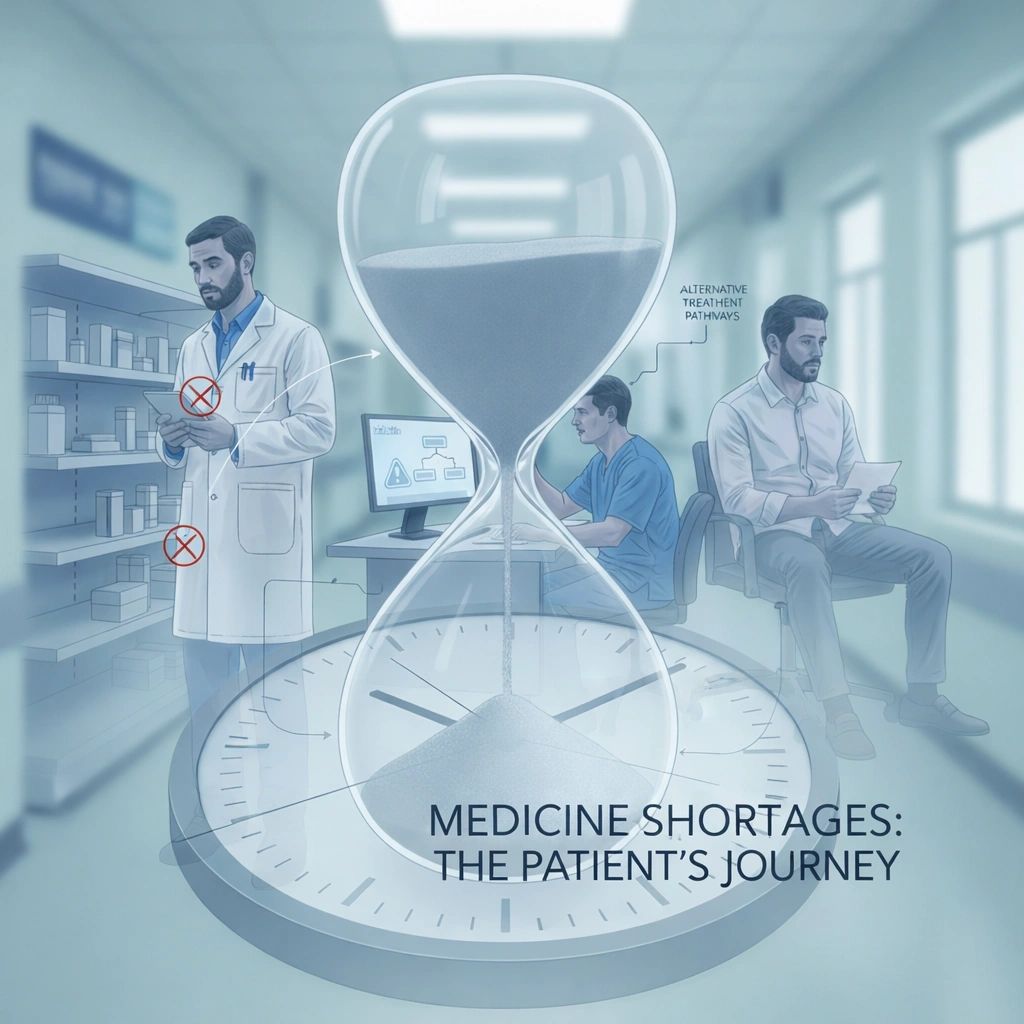
From the outside, a medicines shortage can look like a simple inconvenience.
A prescription delayed. A trip to another pharmacy. A suggestion to “try elsewhere”.
From behind the community pharmacy counter, it looks very different.
Medicines shortages are no longer rare or exceptional. For many pharmacies, they are part of everyday working life - affecting common treatments, long-term conditions, and increasingly, children’s medicines. While national conversations often focus on supply chains and manufacturers, the real impact of these disruptions is felt most acutely by patients standing at the counter, often confused, anxious, and unaware of what is happening behind the scenes.
“Why can’t you just give me my medicine?”
This is the question pharmacists hear most - and the hardest to answer.
Patients understandably assume that if a medicine exists somewhere, it should be available to them. When it isn’t, frustration builds quickly. Being told to visit another pharmacy can feel dismissive, as though the problem lies with one particular location.
In reality, patients may visit several pharmacies, repeating the same conversation each time, before realising that the issue is far wider than a single shop or supplier. For someone managing a chronic condition, or a parent trying to obtain treatment for a child, that uncertainty is deeply unsettling.
Shortages aren’t just about stock
One of the least understood aspects of medicines shortages is that availability is not purely physical.
In community pharmacy, medicines are supplied under a nationally set reimbursement framework. Prices are fixed centrally and updated periodically, while real-world market conditions can change far more quickly. During periods of volatility, reimbursement prices can lag behind actual acquisition costs.
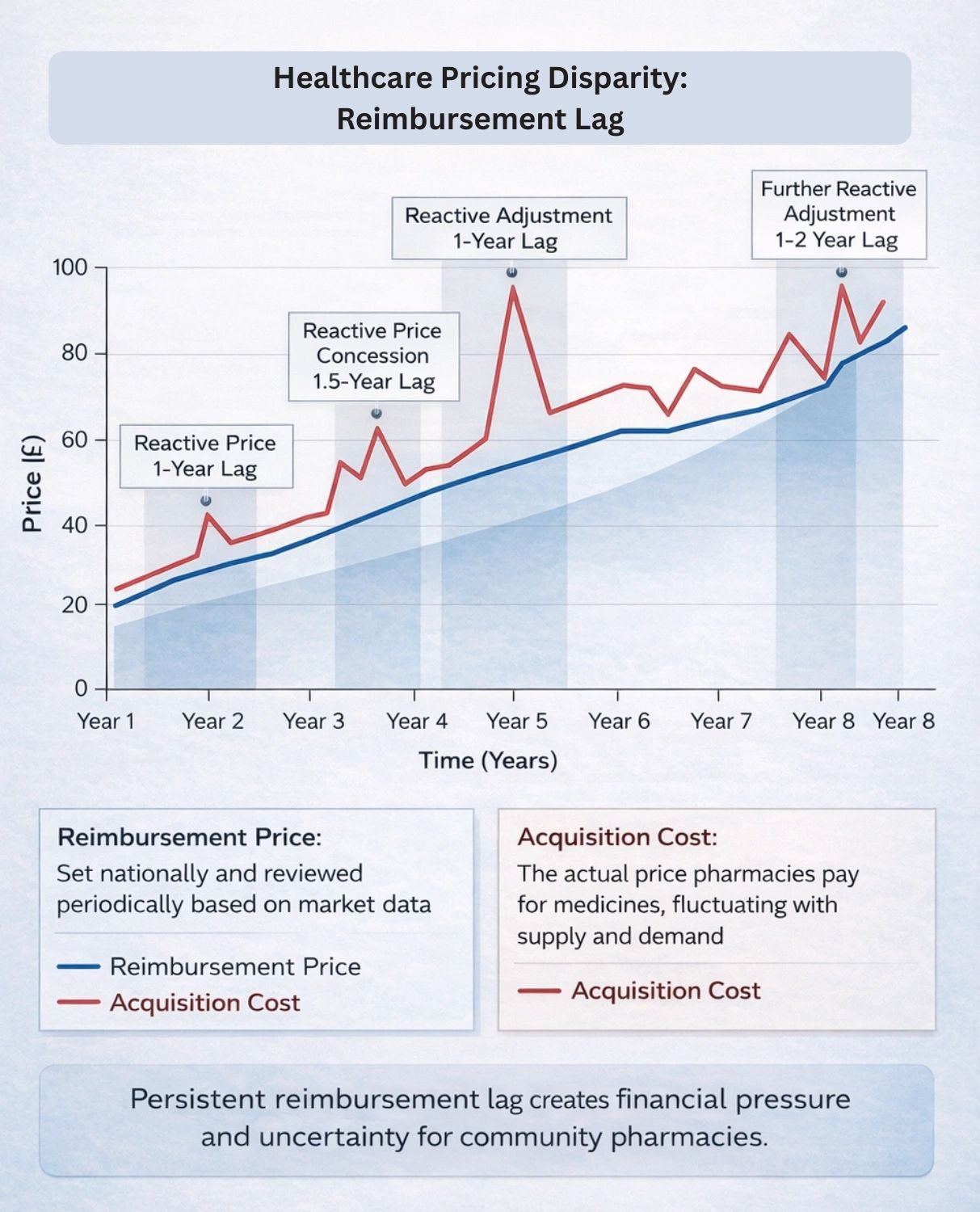
To manage this, the system relies on price concessions- retrospective adjustments designed to reflect genuine market conditions once disruption is already underway. While necessary, this approach is reactive by nature.
For patients, this can translate into delays or uncertainty.
For pharmacies, it reflects a system that struggles to respond in real time to rapid changes in supply and pricing.
The key point is this: medicines access can become uncertain not because pharmacies are unwilling to supply, but because the framework governing reimbursement adjusts after pressure has already reached the frontline.
Children’s medicines: where the system shows its cracks
Few situations are more distressing than shortages affecting children.
Liquid antibiotics, specialist formulations, and modified-release products are frequently impacted - often for prolonged periods. These are not optional treatments, and delays can have real clinical consequences.
In these situations, pharmacists routinely go above and beyond: contacting GP surgeries, suggesting alternative strengths or formulations, and doing everything possible to ensure a child receives treatment. Parents rarely see the additional time, coordination, and emotional labour involved - only the final outcome, which may still feel uncertain.
Time lost is care lost
Even when alternatives exist, resolving a shortage can take far longer than patients expect.
Pharmacists are often required to refer back to prescribers for even minor adjustments - a different strength, a change in formulation, or a temporary substitute. Each referral introduces delay, adds workload to GP practices, and prolongs uncertainty for patients.
In other healthcare settings, such adjustments are routine. In community pharmacy, they remain tightly constrained, even when the clinical risk is minimal and the supply benefit is clear.
The strain on trust
Community pharmacies are among the most accessible parts of the healthcare system. Patients trust pharmacists - not just to dispense medicines, but to provide reassurance, continuity, and clarity.
Repeated shortages, conflicting messages, and visible frustration across the system risk undermining that trust. Pharmacists often shield patients from the full complexity behind the scenes, absorbing the stress themselves. But as shortages become more frequent, that buffer is under growing strain.
What patients actually need
Patients don’t expect perfection.
They don’t expect unlimited choice.
They don’t even expect everything to be instantly available.
What they do need is:
-
Clear, consistent information about availability
-
Faster resolution when clinically appropriate alternatives exist
-
Continuity of care, even during disruption
-
A system that prioritises resilience, not just lowest headline price
Community pharmacies want the same outcome patients do: timely access to essential medicines with as little disruption as possible.
But without better alignment between real-world supply conditions and reimbursement mechanisms - and without the ability to respond more flexibly when shortages occur - patients will continue to feel the consequences of a system under sustained pressure, even if they never see the causes.
About the Author
Neil G is the Owner at Caledonian Pharmacy, Address: 486a Caledonian Rd, London N7 9RP