Medicine shortages are no longer exceptional events; they have become a constant, disruptive part of modern healthcare. During the COVID-19 pandemic, as hospitals struggled to source even the most essential medicines, the issue finally gained public attention. For those of us working in hospital pharmacy, however, the problem was already a well-known, painfully complex, and often overwhelming challenge.
When I began my postgraduate residency in hospital pharmacy at the University Hospital of Geneva (HUG), I quickly noticed something consuming our days. The management of medicine shortages was taking up hours of valuable clinical and operational time every week. Worse still, critical decisions were being made with fragmented, incomplete information. Clinical data lived in one system, supplier data in another, and local stock levels in a third, and none of them talked to each other.
As a hospital pharmacist with experience in both clinical practice and research, I felt compelled to find a practical solution. When I started my PhD, I decided to focus not on abstract theory, but on a concrete problem: how can we use the data we already have to see shortages beforethey hit us? This is the story of that journey.
From Reactive Panic to Earlier Visibility
The core idea was simple. If prescription data tells us what medicines will be used, and stock data tells us what is left, then combining the two intelligently should allow us to forecast risk, sometimes days before a crisis begins.
This insight led to the development of a digital dashboard designed to integrate three crucial layers of information:
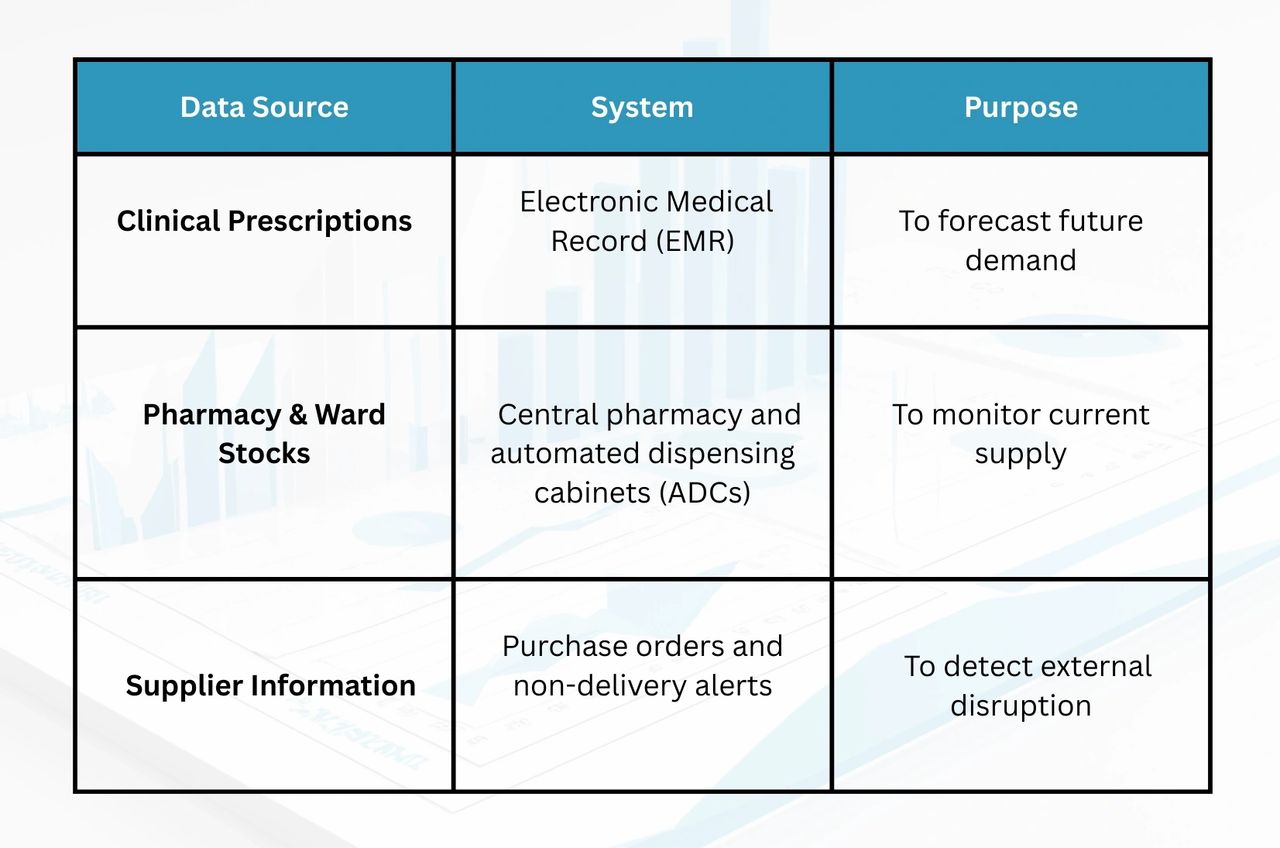
Unlike many hospitals, HUG is highly digitalised. This gave us a unique advantage: we could access stock data not only from the central pharmacy but also from ADCs across 60-70% of our hospital wards. This granular visibility into real-time stock levels proved to be a critical component of our success.
How the System Works in Practice
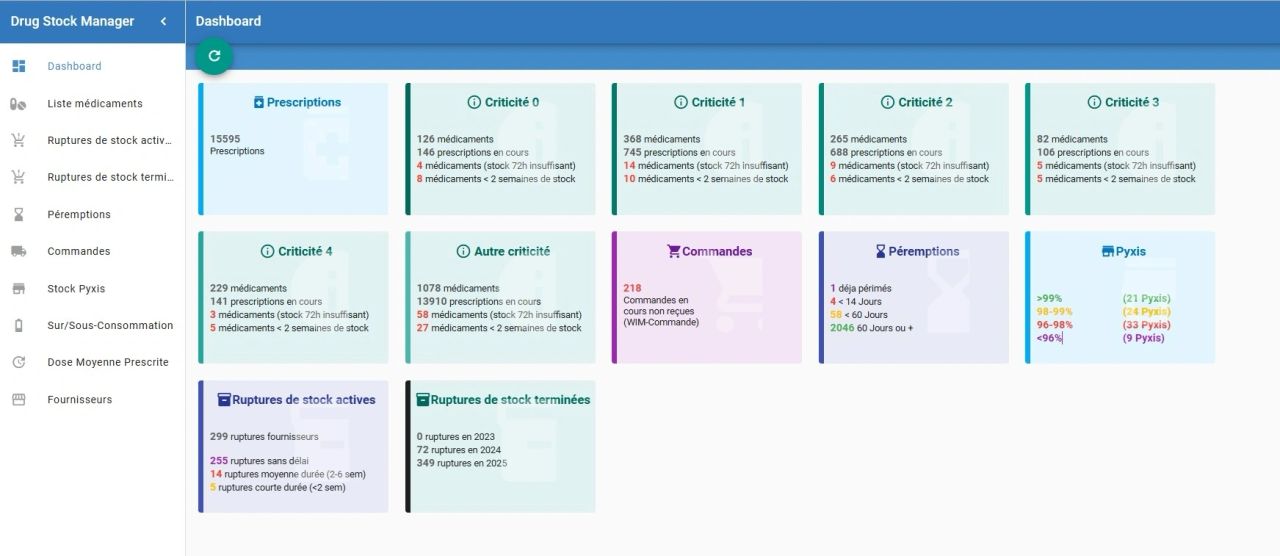
The process transforms raw data into actionable intelligence.
-
Translate Demand: All prescriptions are automatically translated from individual doses into commercial units, like boxes or vials. This creates a forward demand model.
-
Aggregate Supply: Stock levels from the central pharmacy and all connected automated ward cabinets are combined into a single, unified view of available supply.
-
Calculate the Risk: The system applies mathematical rules to calculate the difference between what will be needed and what is available over a specific time horizon.
-
Generate an Alert: When the forecast shows that supply will not meet anticipated demand in the next three days, the system generates an alert for the pharmacy team.
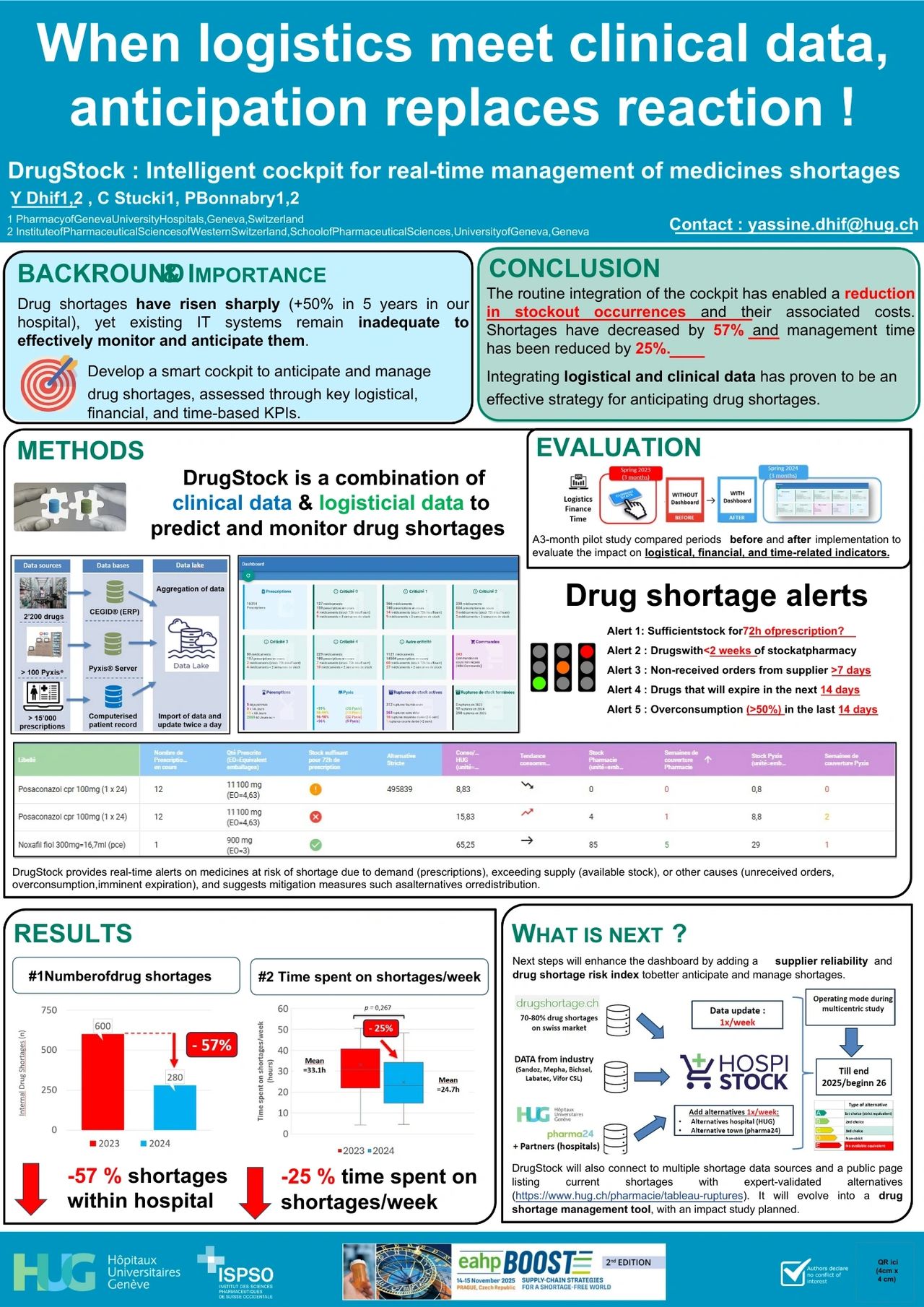
This simple but powerful mechanism gives our team a crucial head start. Instead of discovering a shortage when a ward runs out, we have at least three days to act. This window allows us to manage expiry dates, adjust orders with suppliers, or work with clinicians to switch therapies if needed.
The Results: Data-Driven Impact
The impact of this data-first approach surprised even us. By replacing reactive, panic-driven phone calls with proactive, data-informed decisions, we achieved remarkable results.
-
Internal shortages decreased by 57%.
-
Time spent managing shortages dropped from 33 hours per week to 24 hours per week.
Instead of just reacting to problems, we were actively preventing them from happening. Our first scientific publication describing this method is now being finalised and will be released soon, sharing the details of this success with the broader academic community.
Beyond One Hospital: Building a National Solution
After proving the local approach works, the next step became clear. Shortages do not stop at the hospital door; they are a national, and often international, problem. The second project of my PhD therefore focuses on expanding this concept to build a national platform that connects suppliers and hospitals across Switzerland. This powerful shortage management tool was developed by MaPUI Labs (www.mapui.fr), a French start-up with whom we collaborated to adapt the tool for Swiss hospitals.
The collaborative platform works by creating a shared ecosystem of information:
-
Suppliers feed their real-time shortage data directly into the platform.
-
Hospitals connect using their own formularies, matched via the Swiss pharmacode system.
-
Notifications are sent immediately to a hospital when a shortage affects one of its listed products.
-
Expert Alternatives are contributed by pharmacists across ten French-speaking Swiss hospitals and shared across the entire network.
Convincing pharmaceutical companies to participate was challenging, as transparency is a sensitive topic in the industry. However, when suppliers realised that hospitals were calling them every ten minutes during a crisis, they quickly recognised the value of a single, centralised source of truth and a single point of contact. We currently have five companies, three major and two smaller suppliers, piloting this approach.
In parallel, we work also closely with drugshortage.ch, Switzerland’s largest platform tracking drug shortages, founded 10 years ago as a personal initiative by Enea Martinelli, head pharmacist at FMI Hospital in Interlaken. The platform is updated weekly on a voluntary basis by nearly 80 Swiss manufacturers and covers the vast majority of shortages on the Swiss market. Drugshortage.ch feeds this platform to provide the most comprehensive view of shortages in Switzerland, and following the pilot phase, our goal is for all Swiss pharmaceutical companies to contribute to this collaborative effort, strengthening national monitoring and mitigation of drug shortages.
This collaboration allows us to give pharmacists and physicians better information but also to share expertise and recommend validated substitutions across a wide network.
What I Have Learned on This Journey
This experience has taught me several important lessons about tackling complex healthcare challenges.
-
Shortages are an information problem. While supply chain issues are real, the inability to see them coming is often the greater failure.
-
The data already exists. In many cases, the necessary data to anticipate shortages is already being collected; it just needs to be integrated.
-
Technology transforms our response. Digital tools don’t eliminate shortages, but they change our response from reactive to proactive, saving time, reducing waste, and protecting patient care.
-
Collaboration is essential. Real progress requires a shared vision between suppliers, hospitals, and pharmacists.
Most importantly, I learned that meaningful change doesn’t always require futuristic AI or impossibly complex algorithms. It can start by simply and intelligently connecting the data we already have.
What’s Next?
As we expand the pilot nationally, our vision is clear: to create a Switzerland where every hospital, supplier, and pharmacy shares a unified, real-time view of medicine availability. This transparency helps primary and secondary care providers stay ahead of potential issues. It’s particularly powerful in the Swiss system, where community pharmacists have the flexibility to adjust prescriptions to ensure continuity of care.
Our journey shows that technology can be a catalyst for collaboration and continuous improvement. While challenges in harmonising data and engaging all stakeholders remain, the successes in Geneva and beyond show what is possible. My hope is that one day, this model of data-driven collaboration can serve as a blueprint for other countries ready for change.