If there’s one thing 30 years in pharma have taught me beyond how many versions of the same spreadsheet one human can tolerate, it’s that staying ahead of supply chain disruptions is a full‑contact sport.
For anyone running a generics or established brand portfolio, the landscape can feel like a never‑ending obstacle course. One minute everything is calm. The next, a packaging glitch in Portugal somehow causes a shortage panic in Preston.
Instinct is great for choosing what to have for lunch. But when it comes to multi-million‑pound portfolio decisions? You NEED data. Real data, fast and trustworthy. Not “your information will be refreshed once a month” data.
That’s why real‑time insights have become such a game‑changer and why I believe they’re transforming how the best operators manage their portfolios.
The (Unexpected) Power of Real‑Time Supply Chain Insights
Pharma supply chains are fragile. I’ve seen enough “small issues” turn into full‑blown disasters to know that waiting for lagging indicators is a dangerous pastime.
By the time an official shortage notification lands, the market’s already on fire and someone’s shouting, “Who knew?”
You did. Or at least, you could have.
Real‑time supply alerts and heat maps have completely changed how we manage volatility. Utilising real time data updates including wholesaler stock movements, pharmacy sourcing requests, and even the subtle rumblings of competitor supply issues, allows you to take a deeper dive and interrogate live issues for the benefit of patient care and your commercial success.
Real time data enables you to:
-
Spot shortages while they’re still just suspicious blips
-
Adapt production plans before your rivals have even taken their first sip of espresso
-
Stay reliably supplied while others are scrambling to even understand the issue
One of my favourite early warning signs? A sudden spike in pharmacy requests for a molecule we cover. It’s like a quiet tap on the shoulder saying, “Hey, something’s happening, time to look sharp.” You get weeks of warning while competitors are still debating whether there’s a real issue.
The difference between reacting and leading is often measured in weeks.
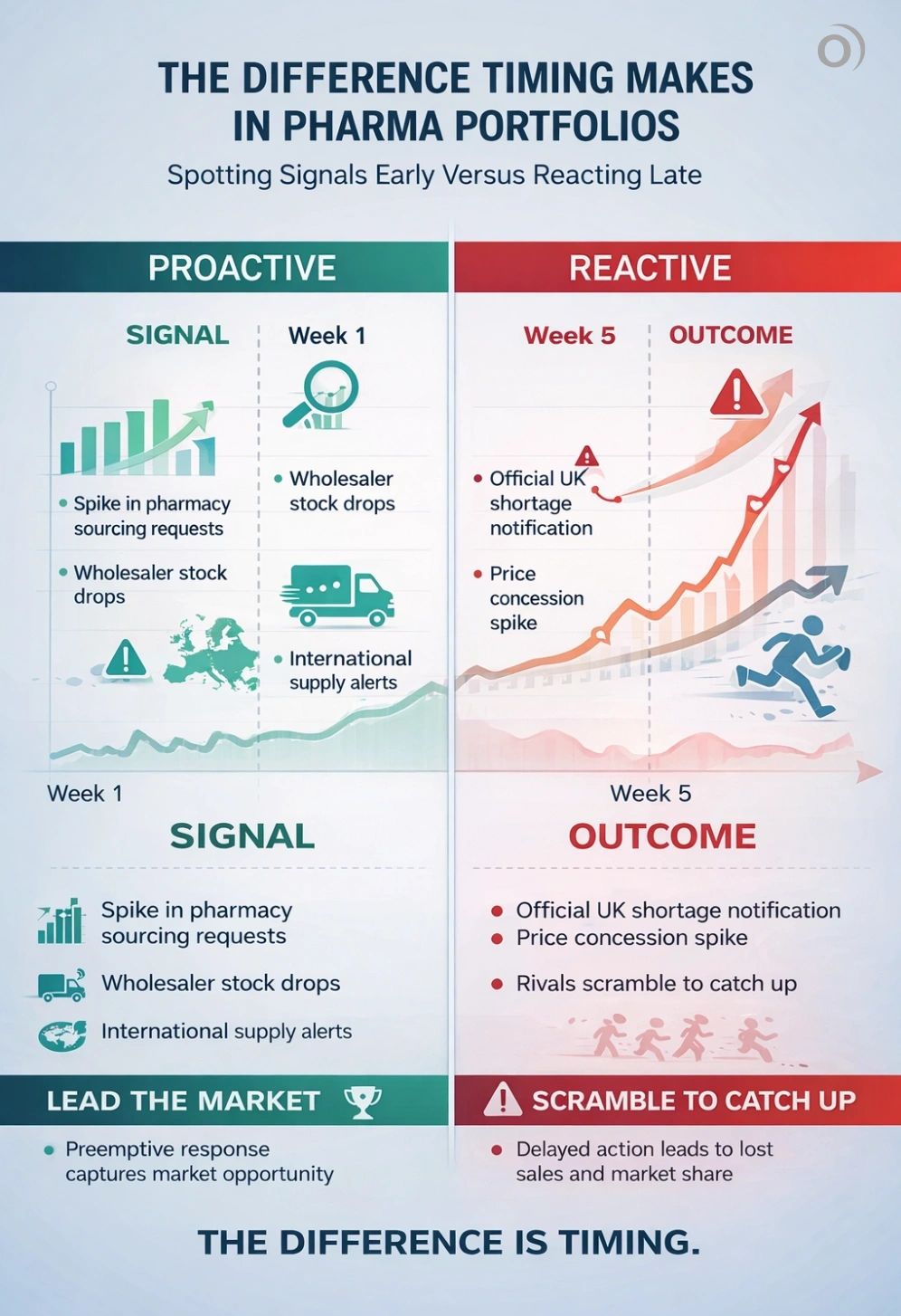 Early signals create strategic advantage. Late signals create volatility.
From Fragmented Data to One Clear View (aka: Saving Your Sanity)
If you’ve ever pieced together market intelligence from multiple spreadsheets, platforms, emails, and one suspiciously old PDF, then you know the pain.
It’s very easy to miss the forest for the trees when half your data is sitting in someone else’s inbox.
Modern platforms that unify international supply events, pricing signals, and market behaviours into a single source of truth? Yes please!
Here’s what consistently moves the needle:
-
International supply data that acts like a crystal ball
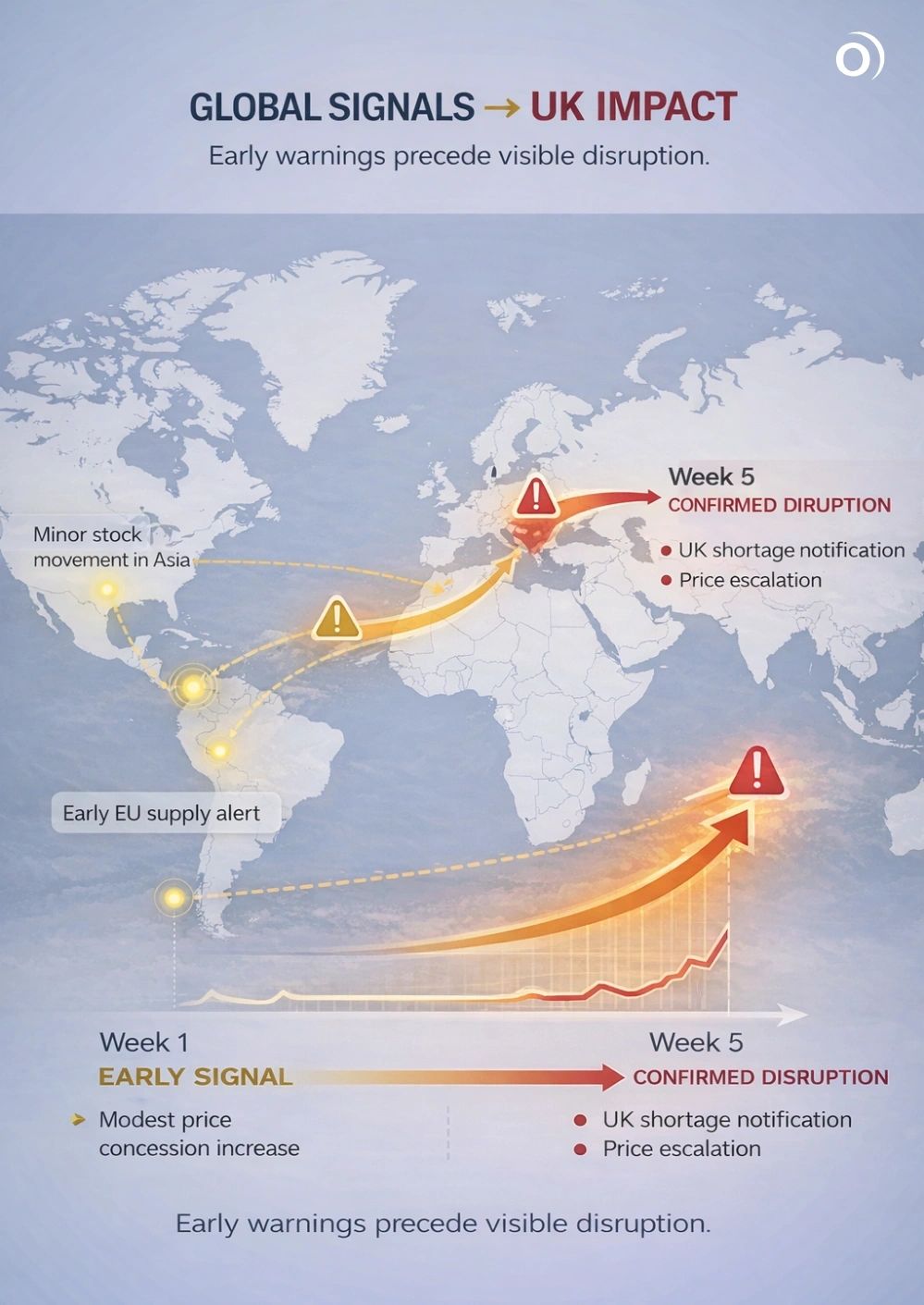
A disruption in mainland Europe often gives you early notice for what’s about to hit the UK. -
Live pricing, bids, concessions, the whole picture
Pricing moves fast. Blink and that molecule you ignored last week is now having a moment. Visibility of both failed and successful pricing strategies enables you to find the sweet spot to deliver sales.
When you see a wave of supply alerts on the continent and a spike in UK concessions, you’re not looking at a coincidence, you’re looking at a business opportunity wearing a hi‑vis jacket.
Supply disruption is rarely local. The UK feels what happens elsewhere.
Turning Market Intelligence into Competitive Advantage for Generics suppliers
Let’s be honest: generics is not for the faint‑hearted. Margins can be thin, competition is fierce, and sometimes it feels like the winner is decided by chance. But with real‑time insights, opportunity spotting becomes less of a gamble and more of a science:
Instead of reacting to whispers in the marketplace, you’re responding to facts. Actual, measurable signals. And that shift, from instinct to intelligence is where teams really start winning.
Proactive Portfolio Management: The New Gold Standard
Gone are the days when quarterly reviews were enough.
In this market, a quarter is practically a lifetime.
What works today:
-
Rapid reaction to market events
A competitor recall? A disrupted batch?
Yes, it’s stressful, but also an opportunity if you’re first to respond. -
Optimised production & inventory
Real‑time demand signals let you avoid overstock (CFOs cheer) and stockouts (everyone else cheers). -
Commercial strategies shaped by real‑world, not theoretical, data
And this is where visibility turns into advantage.
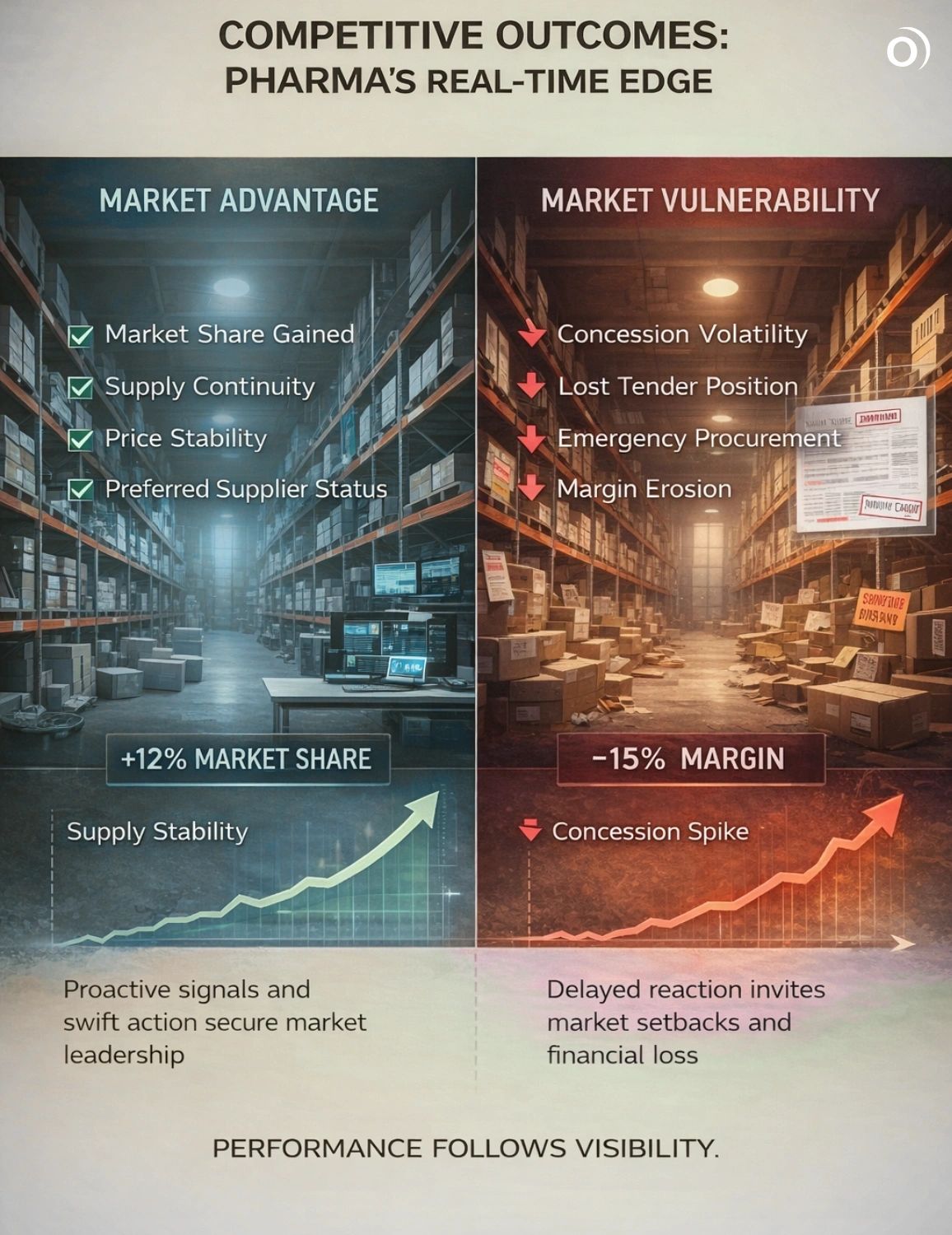
Real‑time platforms don’t just throw numbers at you, they show the story behind the numbers.
That context is priceless. It’s the difference between simply knowing what is happening and understanding why it’s happening and what you should do next.
Conclusion: Timing Isn’t Everything, But in Pharma? It’s Close.
In today’s environment, you simply can’t afford to operate without timely insights.
Real‑time data doesn’t just help you avoid trouble, it helps you find the gaps, move quickly, and outperform slower rivals.
Whether you’re managing generics, established brands, or both, the companies that stay informed are the ones that stay ahead.
If you’re serious about transforming your portfolio performance, my advice is simple:
Invest in a real‑time insight platform and stay ahead of the curve instead of constantly trying to catch the train that has already left the station.