On 19th April 2023, a critical conversation took place. Pharmacists and healthcare leaders gathered for a roundtable hosted by The Pharmaceutical Journal to address one of the most pressing challenges facing the NHS: the escalating crisis of medicine shortages. The core message was unanimous. Pharmacy teams need timely, accurate, and concise information to navigate supply disruptions. For too long, they have been forced to react, chasing shadows in a system that fails to provide the necessary foresight.
This call to action highlighted deep-seated frustrations with the status quo. It painted a picture of duplicated efforts, spiralling costs, and immense administrative burdens. But it also provided a clear blueprint for a solution. Over the past two years, iethico has been dedicated to building that solution. Our MedSupply Intelligence service was engineered to directly address every key issue raised at that roundtable, transforming how pharmacies manage and mitigate the impact of shortages.
The Problems Voiced by Pharmacy Leaders
The roundtable participants did not hold back. Their insights revealed a system under immense strain, where a lack of good information creates cascading problems for pharmacies, suppliers, and patients. The challenges they described are familiar to anyone on the front line of healthcare.
“Everyone is chasing the same thing”
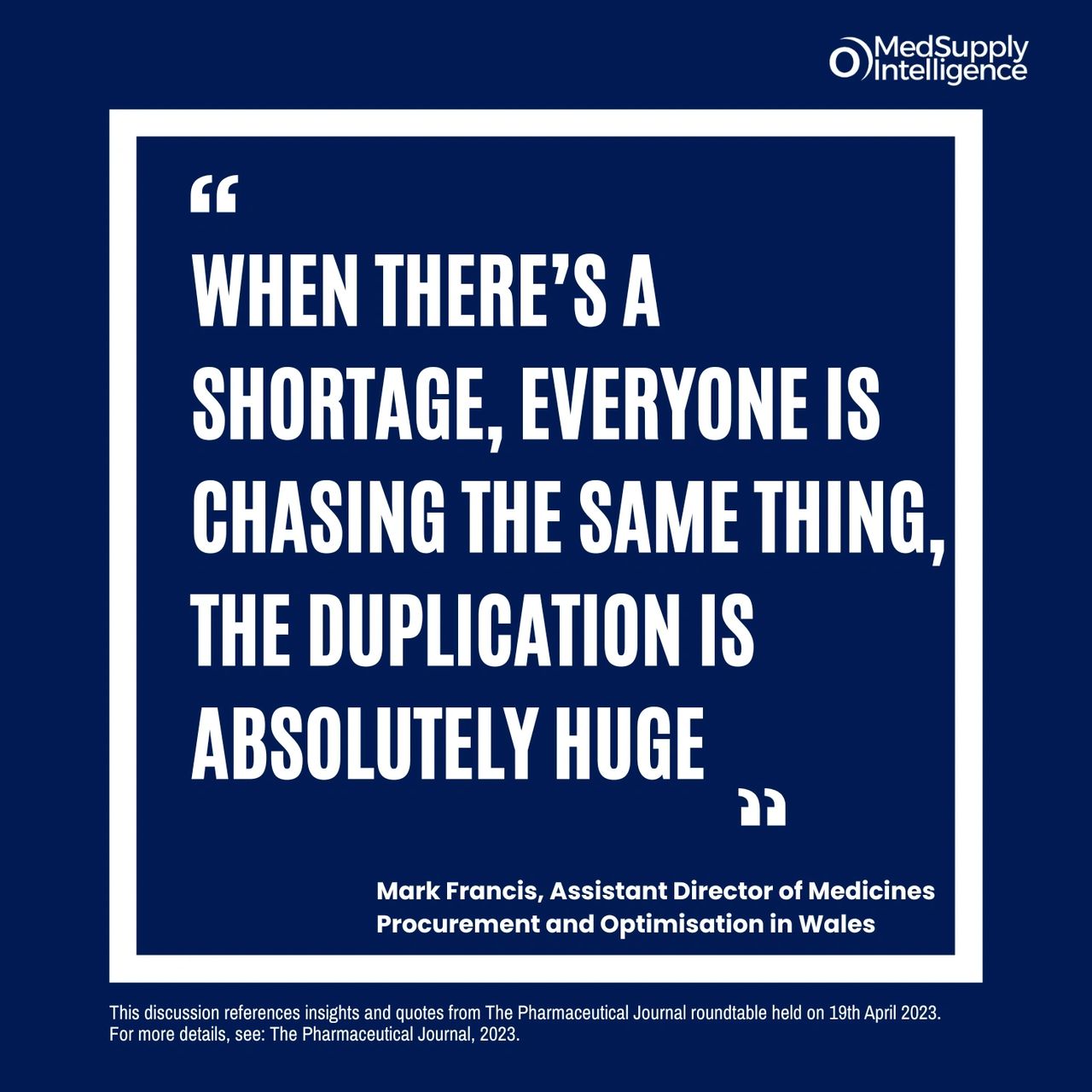
Mark Francis, Assistant Director of Medicines Procurement and Optimisation in Wales, captured the inefficiency of the current process perfectly: “When there’s a shortage, everyone is chasing the same thing, the duplication is absolutely huge.”
This statement reflects the daily reality for procurement teams. An official notification of a shortage triggers a nationwide scramble.
Countless hours are lost as different teams across the country independently perform the same searches, make the same calls, and investigate the same dead ends.
This monumental waste of resources prevents pharmacists from focusing on their primary role: patient care.
The duplication of effort not only drains time but also intensifies competition for any available stock, often driving up prices in the process.
Measuring the True Cost of Shortages
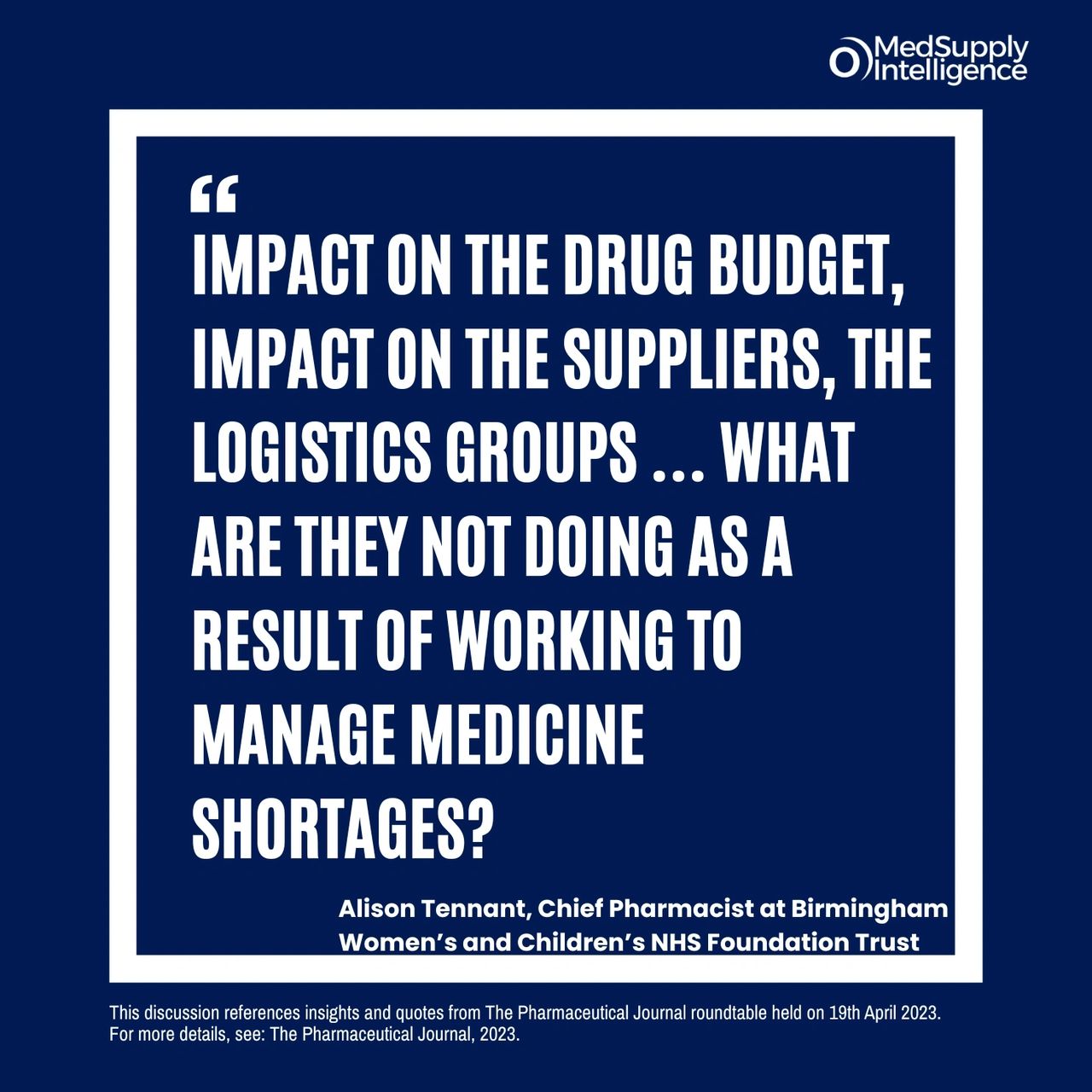
The impact of shortages extends far beyond the availability of a single product. Alison Tennant, Chief Pharmacist at Birmingham Women’s and Children’s NHS Foundation Trust, pointed to the wider consequences. She highlighted the need to measure the “impact on the drug budget, impact on the suppliers, the logistics groups … what are they not doing as a result of working to manage medicine shortages?”
This is a crucial point. The hidden costs are substantial. Pharmacy budgets are hit by inflated prices for alternative medicines. Suppliers and logistics partners face disruptions to their normal operations as they field a barrage of urgent inquiries. Critically, the time that skilled pharmacy professionals spend managing shortages is time they cannot dedicate to clinical services, medication reviews, or patient consultations. The opportunity cost is immense and directly affects the quality of care.
The Barriers to Finding Alternatives
Sourcing alternatives is the default response to a shortage, but it is fraught with difficulty. A survey by The Pharmaceutical Journal laid bare the primary obstacles. An overwhelming 91% of respondents cited the poor availability of alternative medicines and formulations as a major problem.
Beyond availability, pharmacists pointed to other significant barriers. The increased cost of alternatives was a concern for 87% of respondents, placing financial strain on both the NHS and patients. Most tellingly, 81% identified the lack of accurate and timely information as a significant barrier. This information gap is the root of the problem, leaving pharmacy teams unable to plan effectively and forcing them into reactive, high-stress decision-making.
“Information is Key”
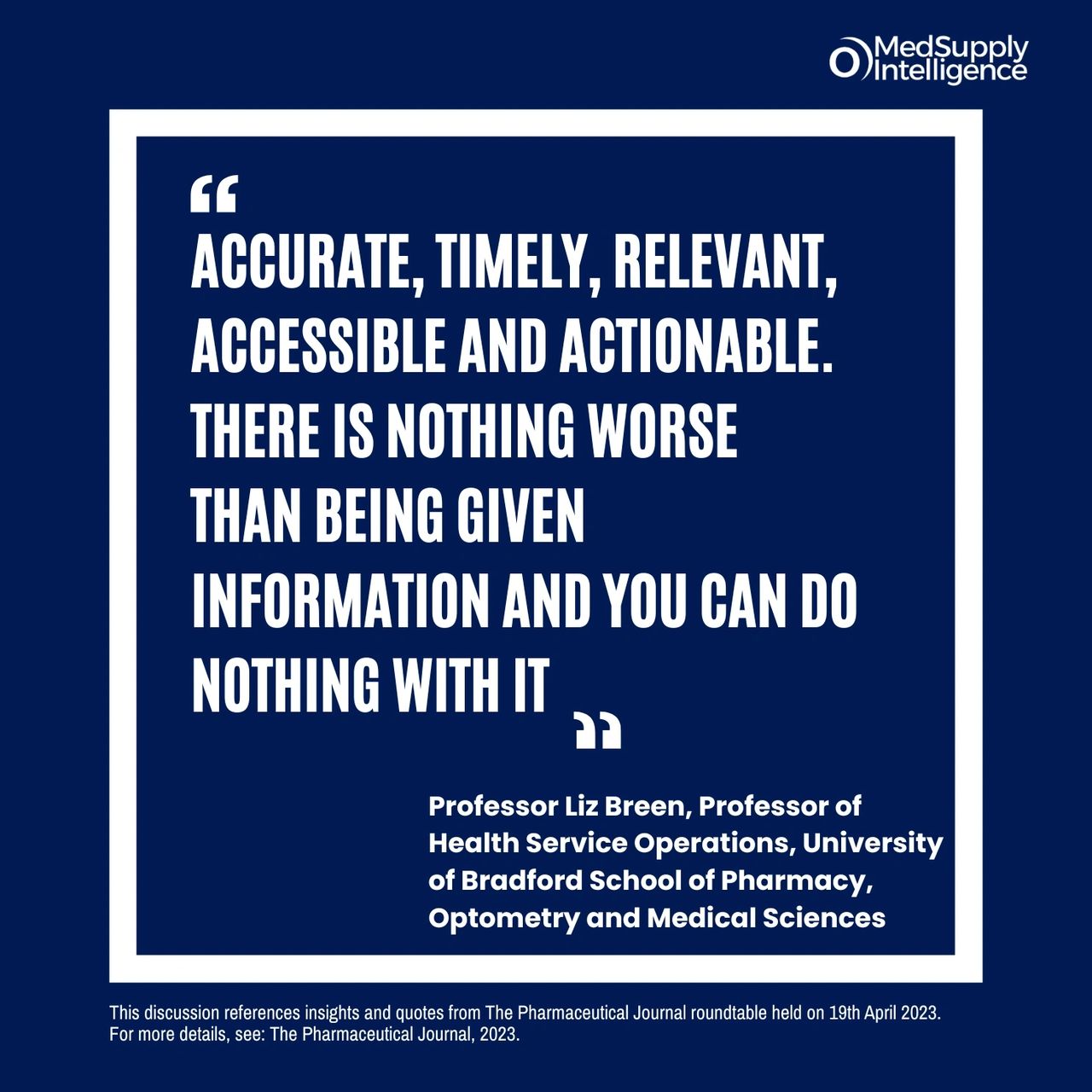
The need for better information was the unifying theme of the discussion. As one participant, Breen, summarised, “Information is key… and this was mentioned so many times: accurate, timely, relevant, accessible and actionable. There is nothing worse than being given information and you can do nothing with it.”
This powerful summary defines what a true solution must deliver. Information is not valuable unless it can be acted upon.
A notification that arrives too late, lacks detail, or offers no clear path forward only adds to the noise.
To be effective, intelligence must help pharmacists to make proactive choices that secure their supply chain and protect their patients.
The Solution, Two Years in the Making: MedSupply Intelligence
The challenges outlined at the roundtable were not new to us at iethico. They were the very problems we had set out to solve. For two years, our team has worked relentlessly to develop a service that moves beyond simply reporting shortages and instead provides earlier, actionable intelligence. MedSupply Intelligence was designed to be the answer to the calls for a new system.
Here is how our solution directly addresses the issues raised by pharmacy leaders.
Real-Time Alerts Before the Shortage Hits
The core problem of “everyone chasing the same thing” stems from a reliance on lagging indicators like official DHSC notifications. MedSupply Intelligence changes the game by providing real-time supply alerts that flag risks months before they escalate into national shortages. Our system aggregates data from multiple countries, regulatory sources, and supplier updates. An alert about a manufacturing issue in one country or a delisting in another serves as an early warning for the UK market.
This gives pharmacy teams a critical head start. Instead of joining the scramble, they can begin sourcing alternatives, securing stock, or lining up importations while supply is still available and prices are stable. The duplication of effort vanishes when you are acting on information your competitors do not have.
Actionable Intelligence, Not Just Data
We heard the call for information that is “accurate, timely, relevant, accessible and actionable.” MedSupply Intelligence is built on this principle. Our service doesn’t just present raw data; it delivers curated intelligence.
-
Timely: Alerts are delivered in real time, as soon as a market signal is detected.
-
Accurate: We synthesise information from verified sources to ensure reliability.
-
Relevant: You can tailor alerts to the specific products that are critical to your formulary.
-
Accessible: Our intuitive interface allows you to see price fluctuations, supply history, and available sources in one place.
-
Actionable: We identify potential suppliers, including importers, giving you concrete next steps to take.
This turns information from a passive notification into a powerful strategic tool. It allows you to answer the question, “What are we not doing as a result of working to manage shortages?” by freeing up your team’s time for higher-value tasks.
Mitigating Financial Impact and Securing Supply
The financial strain caused by sourcing expensive alternatives is a major concern. By providing early warnings, MedSupply Intelligence allows you to anticipate price volatility. Our interactive heat maps track price fluctuations, showing you how the market is reacting to supply pressures. This foresight enables you to make informed purchasing decisions and secure stock before prices spike, protecting your drug budget.
Furthermore, by identifying a global network of suppliers, we break down the barrier of alternative availability. You are no longer limited to what your usual wholesaler has in stock. You gain access to a wider market, increasing your chances of maintaining a secure and resilient supply chain.
A New Future for Pharmacy Procurement
The 2023 roundtable was a watershed moment, articulating a clear and urgent need for change. iethico listened. The result of two years of focused development is MedSupply Intelligence, a solution built by experts, for experts, to solve the exact problems identified by front-line pharmacy leaders.
But the reach of MedSupply Intelligence extends well beyond pharmacy teams, helping the entire medicines supply ecosystem thrive in an era of increasing pressure and complexity:
-
Manufacturers and Market Access Teams: Gain early visibility into supply issues that could impact product uptake and reimbursement. With real-time insight into shortages and market demand, these teams can proactively engage with regulators, optimize supply chains, and ensure patients have uninterrupted access to vital medicines.
-
Wholesalers and Distributors: Benefit from timely alerts on supply disruptions and price fluctuations, enabling better stock management, reduced wastage, and smarter distribution strategies. This intelligence helps wholesalers to fulfill contractual obligations and be reliable partners for their customers.
-
Hospital and Community Pharmacy Groups: Receive concise, actionable information on emerging shortages, allowing them to plan procurement, manage inventory, and support frontline staff without unnecessary duplication of effort. They can prepare for potential challenges in patient care before they escalate.
-
Health Systems and Payers: Achieve a system-wide perspective on medicine availability and associated costs. Early warnings help minimize budgetary shocks, align reimbursement strategies, and ensure continuity of care at scale - even during volatile periods.
We are proud to have built the system that pharmacists called for: one that delivers timely, actionable intelligence to combat medicine shortages proactively. By transforming data into a strategic advantage, we help stakeholders across the supply chain to move from a reactive state of crisis management to a proactive position of control. The era of chasing shadows is over.